


Archived
Forum Replies Created
-

I am siding with Jon on the heat thing. We took a trip to CO and had some heating issues. Rather than take the chance on “Frying” my 8V, I wound up a Core job and have done well ever since. That said, I know what you mean about the Gauge reading, how bout your direct gauge inside engine compartment. My mind was made up without a doubt by using my IR gun on the face of the radiator and finding temp readings all over the spectrum.
-
I have to multi-task, remember, bus = work in progress, never ending!
-
I thought you were working on a poop tank ?
-
Archived
MemberJune 11, 2012 at 11:01 am in reply to: Stop engine and check engine lights coming onThanks for the info.
I did get the fault codes and they are as follows:
35 oil press sensor hi voltage
36 oil press sensor low voltage
43 low coolant level
45 low oil pressure
All the fluid levels are fine, the oil pressure and water temp gauges read normal.
Also, I could not locate the coolant level sensor terminals.
Although I don’t really want to, I will probably have to get it to the Ft Myers Detroit Diesel service center and have the pro$$$ fix it.
Having just read the post on bus towing, I am not looking forward to that option, so I will have to drive it there (20 miles).
-
OK boy’s, here’s a couple pictures…
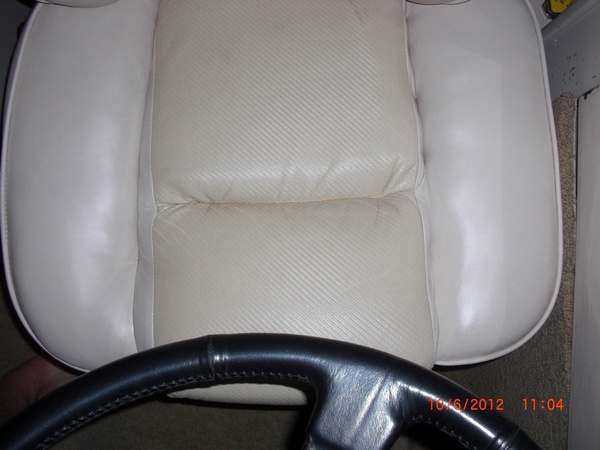
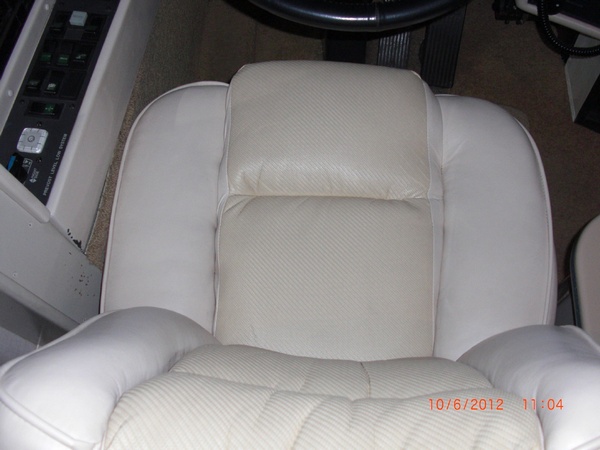
-
Never let this bunch of bus drivers find a weak spot. They will just wear you out.
You are obviously a wise man stating as soon as you get back from AK you will get rid of a shield.
-
Some regulators are adjustable. My house batteries were just changed and the regulator was lowered to 13.6, its lowest setting. Keep in mind that your inverters are working when on engine power,or are likely working at least. Given the increased 12 volt loads, the higher voltage should not be a concern, as long as you’re within the battery’ specs. Lifeline’s specs are 13.1 – 13.4 for float and 14.2 – 14.6 for charge.
Gil
-
I thank you.
-
I took a picture of the hose for you but couldn’t post it for some reason so I sent it to via your email… hope it helps. It feels like it has a steel wire or cable running spirally through a very heavy thick rubber hose.
-
The new coach is great and we were instructed to remove the converters logo plates if we ever were to use the plastic bug shields. Having our converters name on our bus is far more valuable to us than having a piece of plastic detracting from the beauty so we had to refuse Al’s offer to pay us in large bills to take the shield off his hands.
Mark, we still haven’t got the smile off our faces from buying our new to us coach.
-
The coolant level sensor is on your coolant header tank and just put a paper clip or wire between the two terminals on the connector. Some coaches have had the wires to the cable pulled too tight and that has caused some problems.
I cannot tell you how to flash the codes on your model coach. The Prevost shop manual should tell you how to access them and it is available on line here:
http://prevostparts.volvo.com/technicalpublications/en/manuel.asp
On our 1987 we put a jumper between pins H and M on the plug for the reader in the steer compartment and the codes flashed, and I know other vintage coaches had different ways to check the codes.
-
Archived
MemberJune 10, 2012 at 8:27 pm in reply to: Time to Change House Batteries – AGM/Wet cell – $I hope everyone recognizes an excellent point made by Ed.
When one cell in a battery fails it typically is the first domino to fall and it ultimately takes out all the battery set. While the discussion and focus is on how the batteries are cabled to insure equal loading, discharging, and charging everyone needs to recognize our batteries are the heart of our coaches and they need to be properly connected together and charged. Failure to do either can result in a premature battery failure.
Our batteries have a finite life. And it has been my experience as they begin to fail at the end of life the first thing that happens is we experience what appears to be unusual problems that could be inverter problems, alternator problems, battery problems or wiring problems. And those problems tend to drive us crazy until we bite the bullet and separate the batteries and load test them individually. Waiting until the batteries fail or begin to fail may allow an owner to save a few bucks, but can provide some tense moments until the weird problems are found to be failing batteries.
My tolerance level for surprises is very low so I throw away perfectly good batteries every five years. I make absolutely certain the inverter charging cycle is correct for the type battery, and that all posts clamps and cables are in good shape. I have lived through how a single cell as Ed describes can play havoc with batteries and have insured I never discharge below a 50% of capacity. The worst thing to pinch pennies on is your batteries by trying to nurse every last volt from them. And I urge you look at how your batteries are connected compared to Ed’s diagrams and try to insure they do charge and discharge properly.
-
No Tom….. but I can make some stuff up if you don’t get any response. 🙂
-
Archived
MemberJune 10, 2012 at 11:23 am in reply to: Stop engine and check engine lights coming onThe stop engine light came on both while driving and when stopping.
How do I locate the pins for the coolant level sensor and how do I flash the codes?
-
Speaking only as if it were just like mine. Mine did not just fall off after removing the bolts, I hammered on the side the bolts go in the blade as to break the rust loose. I hammered around the bolt patten 4 or five times before it broke loose.