


Ray
Forum Replies Created
-

Murph ….we have a CC owner who is going to be a problem.
Our Marathons have been insulted.
-
Jon what weight oil is in rear end? Thanks
-
Andre,
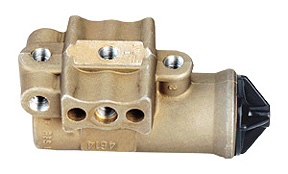
Any truck place will have them, they’re cheap. Common item with Napa also. They’re adjustable, you can turn the air up or down, but the spread between the cut in and cut out is about 30 psi. So it will usually cut in at 90 and off at 120. I like 125..
-
My experience with my 8V92 was that the critical issues were fuel and coolant dilution of the oil. The fuel dilution will go unnoticed as it leaks inside the engine from injectors/lines and will toast an engine if not detected. I have an oil analysis done at every change and look specifically at these two items. I dn’t get quite as excited about the metal issues unless they’re way out of line. Remember, engine oil also lubricates/cools the alternator and air compressor so they could be a source of contaminants.
-
Packing up the tool box for the day;
Your a wise man…. Bob.
-
-
I use inflate-through double seal valve stem caps all the way around. I was having the problem with a couple of my valve stems sticking open when checking pressure. These double seal caps had been working great without a single leak or loss of PSI on any tire over the last few months. Always possible that one leaked, but both the top and bottom seal would have to leak to lose air. Remote tire repair company I lined up (Olin Mott) never called today as promised to schedule the visit. Tire continues to hold 83.5 PSI this AM. It does not appear to be leaking at all. I still plan to have it removed and checked out thoroughly before putting any highway mileage on it.
-
Rob,
You have your e-mail on the site not shown. You can change that in Profile if you want folks to be able to contact you.
Shoot me an e-mail so I can get you pricing. Also, go to Lifelines site and determine what batteries you want.
-
Jon,
I agree with the premise that too much information is probably worse than not enough. Soccer Mom’s getting reports on transmission temperatures, light bulb failures, proximity to service intervals and the like serve little use.
I recall going through the factory school as initial cadre (first guys at the airline to fly this new beast) on the MD-11. All of our steam gauges had been replaced by 6 CRT’s (television sets) and a thing called an MCDU (miscellaneous control display unit), assorted other electronic gadgetry plus they stole our flight engineer, whose charge was to watch “stuff”. The system provided the latest in navigation (laser ring gyro’s that were similar to INS but had no moving parts, at least that could be seen or heard), all traditional flight instruments plus the moving map displays, and much more. The system would not only, should you ask it, provide brake temperatures, tire pressures, hydraulic temperatures, pressures and quantity but would also monitor everything that went on in the bowels of the machine. Now here is where Honeywell really shined…all of this monitoring was tied to a central fault display system and various cues would be presented in order of severity. From level 0 to level 3. Level 0 was information, if you wanted it…like aft lav holding tank approaching capacity while level 3 would blurt out an emergency tri-tone and turn on a number of red lights plus, in a female voice (supposed to keep everyone more calm), may announce Engine Fire Number 1!. What’s more all of these alerts were inhibited during critical phases of flight, like take off and landing….pretty smart system. One thing that has to be remembered here, this was all on an airplane. Now, with all of that said, the important thing to remember is that, even with all this high level of sophistication at least half of all warning we ever received were false alarms, sensor errors! Additionally these systems were under constant supervision by not only Honeywell but also our own maintenance departments; they were tuned, updated and tweaked all of the time.
Now these systems are making there way to rolling stock . When your granparents were in their buggy behind the horse they new they were lugging the animal if it was covered with froth and broke wind, the simplist of monitoring systems. Then came gasoline and steam which in the early years were monitored by the presence of flames, explosions or other strange noises……… By the 50’s we had 6V fuel gauges (remember the car that was out of gas at the 1/4 full mark?) and analog oil pressure gauges that were accurate within 50%, cable driven speedo’s and if you were a hot rodder a cable driven Sun Tachometer mounted on your steering column. Did any of these things cause worry, Nope! Now we can monitor axle grease temperature…silly, yes. Too much information available and a good percentage of what is available may be incorrect! Considering that the last maintenance these units will likely ever see is at installation, it becomes almost laughable.
Now back to the K2, I didn’t see any of that above although it would be my guess that it will be available. What I did see was a system that would pretty much do it all, as mentioned the most impressive was the navigation. I can do without the e mail and texting but many of the other features were certainly, for want of a better word, user friendly. Garmin, in general aviation airplanes, takes care of its customers and products, of course that service is not free. It would be my hope to see installations like these as stand alone devices that report, monitor, navigate, adjust electric blinds according to a laundry list selected by the user.
-
Gil, great idea on the Link 2000’s. That will work great. We will be in the coach over the weekend, so this will be a great test.
Jon, agree on the phantom loads, that is always the wildcard. I also agree and am never afraid to run the generator. We find that most of our travel is in the summer months and we are always running the generator when stopped and unplugged because we always run the A/C.
Jon, I am starting to even consider less capacity as we rarely find ourselves unplugged, not driving, or not running the generator. We simply do not dry camp. The very rare occation that we did a Walmart parking lot on a cool night I would have no issue running the generator for the majority if not the entire time just as I would on a hot night needing A/C. At 1/2 gallon per hour and many many hours to spare on the generator, why not use it and save the $$$ and weight. Being a double Rogue River slide coach with 315 steers, we could really use the weight savings.