
-
Driving Assistance or Self Driving Vehicles
Archived replied 7 years, 8 months ago 25 Members · 55 Replies
-

I guess I’m not understanding the reluctance to advances in engineering and safety.
Ok, I get it, you don’t want to have a totally autonomous vehicle.
I like the Prevost Aware System that shows me what speed the car in front of me is going. If a slow car pulls in front of me, the speedometer lights up in yellow how fast ‘that’ car/truck is going. As I get closer, the coach will slow but I usually disengage the cruise.
For instance, if I take half a second and l’m looking at my left mirror and a car on my right, at that exact time, starts to pull in front of me, the warnings will go off. How can that be bad?
Normally, I’m the slower vehicle on the interstate. I roll about 60-65 depending on the posted speed (I go 55 mph in California). If I come up on a car going 45 mph, the coach detects it which is a nice safety feature.
I know that many of you guys are excellent driver’s without the safety features, but I like’m.
We all have been caught off guard and had to make evasive moves. Stability control, ABS, seat-belts and all the other warnings and safety items are a good thing to me.
Safe travels,
Mark
-
ABS does a lot more than reduce the need to modulate the brakes to avoid lockup.
If you are familiar with a stress-strain curve in material science, a tire force-slip plot looks very similar.
Tire slip does not mean the same thing as slide or skid, it’s a function of the elasticity of the tire. In order to accelerate, the wheel has to rotate faster than you would calculate it should for the instantaneous vehicle speed. More tire slip creates more force up until a point. Eventually, the force maximizes and then begins reducing. At this point, the tire is unstable and locks up almost instantaneously.
ABS monitors wheel speed and cycles to keep the tire at the peak of the force-slip curve. That’s the pulsing. Not only that, but it does it for each tire independently. You would need 4 (or more) pedals to achieve the same. They also have means to determine what type of surface the vehicle is operating on, whether it’s different left to right, whether it has changed since the beginning of the event, whether there is a space-saver spare installed, etc. It also attempts to balance stopping, vehicle stability, and steering ability.
We had drivers that thought they could beat the ABS, so we had them try one day, in a straight line on a dry course (ideal conditions). Suffice it to say, they could not.
The same is true of ESC.
I don’t think ABS or ESC does much to coax a driver into an inattentive state though. It could give some a false sense of security, but it’s still well worth having.
-
Well Said Mr. Mark.
(And you used fewer words than I did!)
Jeff and Lindsay
91 Marathon XL -
I never said I am against ABS. Quite the contrary. But if all you drive is an ABS equipped vehicle, and your preferred method of stopping in an emergency is to slam on the brakes and hold your foot hard on the brake pedal and let the ABS do the work of maximizing the braking effort, then when you do not have ABS or ABS functioning your normal reaction to a needed panic stop will be to mash the brake pedal and not let up, at which point you become a passenger in an uncontrolled vehicle.
On two occasions I flew right seat with “qualified” pilots and the plane had a system go to hell. In those two occasions both pilots freaked out and froze because they apparently had not made any effort to get recurrent training to equip them with the skills needed to deal the system failure. In both cases I took the plane, something a right seater should never have to do if the pilot sitting next to them is healthy.
Technology has had tremendous benefits, but they come at the expense of needed driver skills, and what I am hearing on the forum is some folks are literally placing total reliance on a mechanical system for their well being, and nobody has ever mentioned working hard to develop or maintain the driving skills that are going to be needed when those technical aids turn to tapioca.
-
Technology has had tremendous benefits, but they come at the expense of needed driver skills, and what I am hearing on the forum is some folks are literally placing total reliance on a mechanical system for their well being, and nobody has ever mentioned working hard to develop or maintain the driving skills that are going to be needed when those technical aids turn to tapioca.
Maybe I missed a post or two but I’m not sure that I’ve read on this forum that some of us are placing total reliance on mechanical systems. There’s a big difference between appreciating the benefits of new safety technologies and relying on them.
This brings up a related question: Why has the RV industry not created a driver training program? Where is a new or potential owner supposed to go to learn how to drive and operate a motorhome? Other than professional truck driving schools, is there an option available for recreational motorhome users?
The motorcycle manufacturers fund the Motorcycle Safety Foundation which offers new rider training programs, but it seems the RVIA has done nothing in this regard. Wouldn’t it be a good thing if entry level or refresher classes were offered?
-
I didn’t think you would be against it because, as I said, it doesn’t do much to allow you to do something other than drive. It enhances the driver, rather than replacing them.
I regularly drive personal vehicles that don’t have ABS/ESC/ADAS. I agree that doing so does make you sharper (and any kind of competitive driving is a plus), but I feel safer in a modern car. I can’t stand lane keeping assist though.
-
My comments need to be in context.
I think it is fantastic if I have all of the passive but active safety enhancements ranging from adaptive cruise control to lane change alerts, to ABS to cars that will do the parking for you or at least tell you when to step on the brake or gas.
I know these devices are better than any driver because they do not get tired or bored. They are precise. But unless you all see these as supplementing your driving skills and not a substitute I am opposed to them.
If for a moment I thought all of you were so serious about your skill retention you would drive in a manner to rarely if ever have those features function I change my tune. I do not get that sense. I seem to hear they are safety features being relied upon. I also get a sense having them allows even more use of the phone or other distractions while driving.
Don’t feel bad the pilot community used to thrash me for hand flying all instrument approaches by hand rather than using the autopilot. I was told how precise the autopilot was and how any autopilot is better than a human. But like the devices being touted here autopilots break and when they do you only have your skills between you and a bad outcome. Use it or lose it.
-
Are you the master of your domain?
That’s what the FAA check airman would test us to see, twice a yr, every yr.
The same holds true driving one of these Prevost beast. One better know how to do it with and/or without whistles, bells, and wiz-bang automation.
-
If for a moment I thought all of you were so serious about your skill retention you would drive in a manner to rarely if ever have those features function I change my tune. I do not get that sense. I seem to hear they are safety features being relied upon. I also get a sense having them allows even more use of the phone or other distractions while driving.
I simply don’t remember anyone on this forum stating, or even implying that the reason they prefer enhanced safety or semi-autonomous features was to spend more time using a phone while driving. Personally, when I see a driver holding a phone, it irks me…so at the least we can agree on that.
But, let’s take this conversation to another level. Here’s a thought for you to ponder…
Fast forward just a few years into the future when auto steering technology has matured to the point where it’s reliable enough to be included on a Prevost chassis. Now, imagine this system being smart enough to have the ability to react to a tire blow out and instantly apply the correct steering input to assist the driver in safely controlling the speed and direction to navigate out of harm’s way to the side of the road.
Sound impossible?
It’s not.
Could this save lives?
Probably.
Does this mean the driver doesn’t need to know how to properly operate a bus manually without the need of electronics?
Absolutely not. Yes, just like a pilot, an operator needs to know how to drive a vehicle manually to take control when systems fail. The reality is that autonomous vehicles are coming sooner than some may imagine and that’s a fact.
I’ll quote RFK by saying, “Some men see things as they are, and ask why. I dream of things that never were, and ask why not.”
Yup, I’ve done my share of think tank stuff.
-
Ok, a little off topic but a good comparison….. I think…
We sold (Auctioned) our 1964 Rolls Royce Silver Cloud III back in January after owning it for 18 yrs. Fun car! The ole ’64 had no safety anything….no seat belts, no side lights, no hazard lights, no safety glass, drum brakes, no headrests, etc. It would stop on a dime but your would have to borrow 75 cents.
I remember driving it once when it was windy and I was on the interstate. A gust of wind caught the car and gave me a scare of my life because the steering was the old type … loosey-goosey (rotating ball?)… nothing like rack and pinion. It gave me that ‘pucker’ feeling that Andy mentioned.
I see why the old cars didn’t go as fast, they didn’t need to! Polyglass tires just do not hold the road like a radial.
Safe travels,
Mark
-
Just out of curiosity how successful would a self driving bus be under the many situations we deal with? I’m a relative novice here from the amount of miles driven on my bus. But like you I’ve been in situations where there’s been an accident, road work, soft shoulder, difficult turn etc.
How well would an automated system handle situations unique to a large vehicle? I can understand general driving situations but what about the non standard. Like a tight right turn in town with a sign or pole too close?
You learn these thing through driving and experiences. If you’re use to something driving for you it seems to me you’ll be ill prepared to do so in special situations.
Harry
-
This has been a good discussion and will likely affect us all in the future and I’m all for technology that makes the highway a safer place.
Just think, technology that is almost standard equipment now days could have saved those folks on Amtrak because the idiot in control was speeding. Remember, we can’t fix stupid.
-
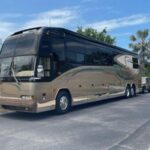
Cars with electronic power-assist steering (EPAS) often have “features” such as road crown compensation and “nibble” compensation that will make it so the driver doesn’t have to steer against the crown or feel a vibration in the wheel. My colleagues and I had a discussion about this one day. We didn’t like how the car could potentially mask a mechanical problem like a worn tie rod or a cupping tire. A blow out is at least an order of magnitude more severe, but the mindset is there with the OEM’s to make the vehicle compensate. Even hydraulic assisted power steering is being developed (has been developed…) for electronic control, so it will make it’s way to heavy trucks.
-
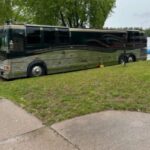
We may be dealing with interpretations here regarding some technologies.
There are a lot of drivers(?) that would benefit greatly by having cars that are equipped to prevent rear end accidents, keep the car in its lane, warn not to change lanes because a car is in the blind spot, or one that has max performance brakes. That is because the people I am thinking of are incompetent or not willing to focus on their driving. I think we all can relate to the 95 year old that should never have a driver license and I think we can all relate to the people that just cannot stop screwing with their phone or car media center. I think the second group should be ticketed and thrown in jail because they are as dangerous as drunks but most who get really upset about distracted drivers do the same thing themselves.
My tacit acceptance of a car that prevents people from hurting themselves or others is conditioned on the fact that the distracted drivers will take advantage and pay even less attention to their driving because the car will do a lot of that for them. But it is also a concern because driving is a skill that requires use and practice and when those systems and devices fail we will have incapable drivers on the highway.
Just once I would like to drop a couple of dozen of these marginal drivers in the middle of a typical western NY winter and require them to spend a day driving.
But technology has also provided us with cars that are better today than they have ever been. Apart from the huge increase in reliability compared to 50 or 60 years ago, We are benefiting from vastly improved tire technology, braking systems, precise steering systems, windshield wiper technology, dash displays, lighting, and roadholding. A lot of today’s cars have a system to prevent unwanted and unanticipated skids. Some prevent wheelspin. All now have various degrees of occupant protection such as seat belts, air bags, crumple zones, side beams, etc.
None of the above detract from driver skills and most actually enhance them because none of the above take away from your requirement to use and practice driving skills.
I draw the line when a “driver” is so incompetent or lazy or distracted the active features such as adaptive cruise control are not only in place, but the “driver” actually see them working. If I had lane control and I was such a lousy driver it would occasionally remind me I was drifting I would consider myself doing something wrong. Same with a feature that would begin slowing or even stopping the bus or giving alerts because I was following too close. Everybody gets a walk when the system slams on the brakes because of the jerk that cuts in too close, but not when the traffic ahead is going so slow the alarms are going off. That shows a lack of attention or an inability to anticipate.
-
WHAT IF?
With all of the new Technology showing up on the new cars, I think Jon should get a big insurance policy,(cause he is gonna blow up) a smart phone then he could check the tire pressures, locate the car, unlock the doors, remote start the engine, schedule the service and see if it has gas – then a smart watch, gives him his heart rate, tells him he has three emails and two text messages, also what time it is and how many steps has for the day -how many more he needs to get a badge, blue tooth it all together and then when he gets in his car – it chimes and recognizes his phone and taps his wrist and to make him look at his watch to see what the hell it wants,and it already anticipates his destination, tells him drive time, traffic conditions and eta- most of our daily driving habits are to the same destination so he may ignore the navigation part, but the speed limiter would engage if he were to exceed the posted speed limit. and might even shake his butt a few times (the vibrator) Then he could accuse the car of sexual harrassment, however my new one does not have a groper — time to trade.
I am being sarcastic and poking fun at and with Jon, but I agree with his thinking completely. Our society is getting dumber and dumber and the loss of the need to think is going to become very costly.
Merry Christmas and Happy New Year – may your stocking be filled with hi tech gizmos that tell you crap you already know.
Log in to reply.