


Archived
Forum Replies Created
-

Georges,
I have cleaned my engines over the years with excellent results. But I avoid the use of brute force. I spray it with a cleaner. I use Simple Green, but there are many others. I then use a small paint brush to work it in and loosen the crud. If the engine has been leaking and there is a big build up of oil, grease and grit it may require some scraping to get rid of the heavy stuff first. After working the solvent in with a brush I rinse it gently with a hose and a gentle spray.
I haven’t masked off any electrical connectors or devices, instead I just avoid flooding them with Simple Green and water. To avoid the cleaner from drying I do a section of the engine at a time. I work from the top down.
Apart from avoiding electrical connections I also avoid using a strong stream of water on the radiator. The radiator fins are fragile so if I clean the radiator I use a low flow or gentle spray.
Completely rinsing is vital. Almost all cleaners have the ability to attack something. Simple Green (unless it is the aviation formula) will attack aluminum for example. So I make sure afterI loosen the dirt I completely rinse. Usually a dirty engine requires multiple cleanings so after I have done the engine and I am sure it is rinsed I dry the areas I can get at, and if more crud remains I concentrate on those dirty areas.
Bottom line, just be careful around electrical connections and devices. Do not spray water all around, but direct it to where you need rinsing. If you get the fire detectors wet (some coaches have them on the roof of the engine compartment) you may set off the alarm. The alarm will stop eventually.
Use care if you clean the radiator. A strong spray can damage it.
I have heard folks use solvent, gunk, brake cleaner (nasty stuff to breathe), Simple Green, and even diesel fuel. I don’t know of any that don’t require a good rinsing, nor do I know of any you can use without consequences. Anything that removes crud and leaves a clean engine is going to require some care in use.
Once the engine is clean keeping it clean is relatively easy. A clean engine allows you to spot minor leaks quickly and if you do a visual inspection regularly you can catch common problems and address them before they become serious. If you have the 50DN alternator or OTR compressor look behind the clutch or pulley on those. They all show some leakage, but unless and until the leaks become serious you can easily judge them to be normal, but when the leaks grow you can easily see that it is time to do a repair.
-
The great thing about the Liberty setup is that the 145 gallon tank can be used for only black waste,with the gray water bypass open I can dry camp for over a week and never need to dump,I have had another coach with 2 tanks and I perfer this setup.The RVIA member specs require 2 tanks and I have heard that Oregon requires this of all Oregon manufacturers therefore Marathon and the Country Coaches must have 2 tanks,it is not a choice for them.
-
If I spray the whole engine down with Gunk, is it safe to hose it off with a water hose without getting water into any of the “sensitive” parts?
-
You won’t be able to leave it alone! But with your experience you will have little challenge knowing what works. Enjoy the ride! I started with a Entertainer coach this time. Bob
-
We built a 1984 Eagle from a seated coach beginning in 1999 and sold it last December to purchase the H3-40. Really enjoyed it but would not do another.
-
So Brian, not much of a chance for another GA delivery anytime soon!:)
-
No worry Tom. I started here and must say I like your
standardized slide show better than most. Bob is right about one
thing…. looking at the ads is probably the best way to get inspiration
and to see “what works”. We also contacted Rhonda Bennett at
California Coach Sales. Rhonda really has a good eye for colors and
accents that show a bus to it’s best advantage. She gave Beverly some
advice that makes very good sense. Corey & George, thanks for the
offer. We’re on the west coast but if we have specific questions will
give you a call.
Not likely Jon. Have spent the last 3 years getting this coach in the mechanical shape it now enjoys. Much easier to do a little interior sprucing up than starting all over again. I might consider it though if you’d send me a blank check.
-
Bob, there is at
least one more of us do-it-yourselfers here. I’m willing to share all I know,
but you’re way ahead of me. I may be forced to have that sofa custom made
because I can’t find one that fits the way I want it to. ‘Sure hope I design it
right the first time because looking at all I have to do yet causes naps! -
If the couch don’t sit rite or take good naps! we just rebuild it till it does. Same with all other features of coach. Simple not much glitz. Bob
-
Just a comment. Us Liberty guys have to always mention or point out our polished copper piping. We get enough heat from those that wished they had that so we should not pass up opportunities to mention it.
-
Dan, There has to be some type of valve that either opens a path to the ground, or closes that path for gray water and instead directs it into the holding tank. It looks like a small version of the bigger valve for the main dump and on my last two coaches it was mounted horizontal, while the big one was located vertical.
-
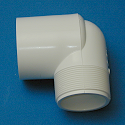
What I did on my 94 Liberty where the white 1 1/2 in PVC comes out the bottom for the grey water was adapt a garden hose connection with PVC that I could install or remove a threaded 90 when I wanted to use the bypass with a hose.

-
Just for a little clarity, our 1994 has inch and a half white pvc tubing instead of copper located in the same place, to the left of the main dump. There is no manual valve to stick (or not). And the only valve is that solenoid activated one from the bathroom switch. We have never used it yet so the solenoid will probably be stuck, but gotta spare.
-
Clifford, for a motorhome my guess is it is a 14 L. But that is only a guess.
Buddy, It never stops, but if you shovel money into the hole fast enough, you catch glimpses of the top of the pile on occasion and you can slow down shoveling for a while.
On my 97, within the first year I went through it eventually doing every drop of fluid, every filter, every belt, every Norgren, air bag and brake chamber. I don’t have the logs now but I think I wore out a few Bic pens logging what I did. The good news was that by zeroing out everything I stopped the serious flow of money for a while, but because the various maintenance tasks had different lives it staggered future expenses so I never got hit again with so much being done in such a short period. And the 97 was in great shape, had been used regularly and had no age related issues I had to address. The previous owner had taken care of it.
My coach projects and maintenance are typically an ongoing process so the flow of money into the pit is steady but tolerable. I’ll bet the 07 is due for tires, batteries, plus a full service plus whatever shows up from limited use. But if the price is right (and there is a lot of room in an 07) it could be a good deal. Where something like this becomes a problem is a 20 year old coach in a similar situation where the cost to bring it back to good reliable condition may be equal to the value of the coach.
-
If anyone wants ideas for updating a coach there is no better way to get ideas than by looking at coach ads. Yes looking at the listings on this site is a good start, but I would go further. Go to the web sites of all the advertisers here on PC and look at their entire inventory. Not all of the available coaches are listed here.
I must warn you that (speaking from recent experience) you may find a coach you like a whole lot, and next thing you will be buying a new one instead of upgrading your existing one.
Christmas is coming and what better gift to stick under the Christmas tree than a Prevost coach? Tell them Prevost Community sent you.