
-
Trying to demystify the Liberty Classic Air System
Mike replied 11 years, 4 months ago 17 Members · 36 Replies
-

Charles if your aux comp fills the secondary tank and primary tank , it should not you may have a bad check valve there are two of them one on the secondary tank and on the primary tank, but if Norgren filter is leaking it should not drain down on brake gauges to zero there is a pressure protection valve that will stop it at 75 psi so if you have failure on aux air side you can still make braking to stop bus. Unless a R14 is leaking or park brake valve that will drain both brake tanks too , I could go on but that’s a start….
-
Charles, the line with the purple tape on it is coming from the aux compressor. The spitter is your protection against moisture from the aux compressor getting into the converter portion of the pneumatic system and the solenoid valve is functioning as a check valve for the compressor since it is opened every time the pressure switch calls for the compressor to run.
As set up your aux compressor air will go to the manifold block, and there will be a line from the manifold block that will allow air pressure from the aux compressor back into the Prevost accessory air tank.
As mentioned in prior posts above the small spitter is your only protection against moisture from the aux compressor and the Norgren trap will not protect your house systems.
-
A question for the Marathon gurus………..
Lately we have been reading about issues with the Marathon auxiliary air tank and corrosion within the tank due to lack of draining. Since stumbling onto what might be a universal issue with conversions, we wonder what protection the Marathon system has for trapping water from the aux compressor? Does it have a water trap or is the tank expected to be the water trap?
The fact it is isolated from the Prevost system is a plus, except at some point it is presumed the two systems are merged, in which case those conversions have the same problem discussed above.
This issue may be relatively unimportant for some coaches that have limited need for aux air compressor operation, but for those coaches in which aux compressor operation is a must, such as coaches with slides that need pressure for the seal, long term use of the aux compressor can introduce a lot of moisture into the conversion portion of the system and the converter portion and the Prevost portions cannot be isolated in that case.
-
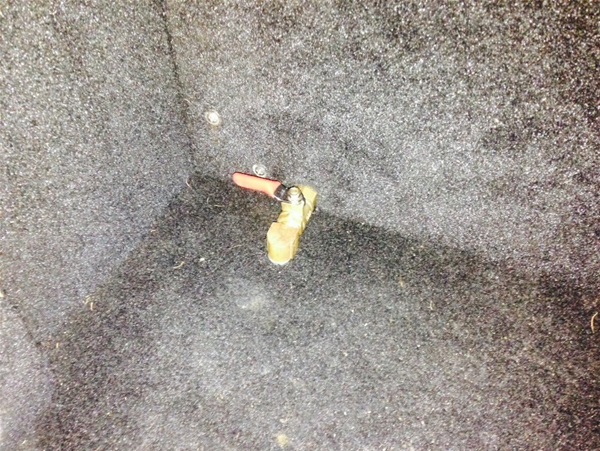
On mine, the Marathon air tank is the drain point. There is no reason to combine the two seperate systems (yellow valve) unless doing as I do, to charge the engine bellows prior to starting, or if you want to use the level low (key on) while parked without the engine running to level up.
Later models may have another moisture trap for the Marathon side. Bernie?
-
The Aux Marathon tank is the only place I know of to catch any moisture. The Marathon and Liberty are completely different.
Aux Prevost and Aux Marathon are never combined unless you do it as Tom does, manually turning a valve. I personally don’t do it.In older model Marathons Aux tank placement was hidden and I believe ignored by most owners so you find rusted out tanks like BA’s and Truks. They are trying to help others by showing what can happen.
What is very confusing to most is we all have the Aux Air Prevost gage in the bus and most people think it is tied into all things related to Aux air. Not so on a Marathon, they have isolated all of the house items to run off the electric driven compressor which is located on the back of the generator on H’s and XLII’s.
On a Marathon if your relatively leak free the setup they have is great. Buses in humid climates and one that has leaking items on the house side will have moisture because of the Aux comp working itself to death.
Later
bv -

I understand what both of you are saying, but what I do not understand is if you are parked, relying on the aux compressor, when you have to drive, do you have to manually open a valve to connect the systems, and then reclose it to isolate them when you are parked again? Or is there a key-on or key off valve that automatically provides that function?
And seriously, are you saying the aux air tank is also the moisture trap?
One thing I am learning for sure is it takes a lot of dilligence to keep water our of any coach house system because I don’t think the converters did a real good job.
-
If you have leaks on the house side of the Marathon you have 2 choices when you are driving. You can let your Marathon aux comp run to keep up the air to operate your house systems or you can manually open your yellow valve to join the air systems.
There is no key on key off function. If your air system is up to snuff you don’t have to join the systems. Without jinxing myself I am relunctant to say how long my Aux air holds because you will scream bullshit. BA is my bona fide on that.
Also I had to check mine but I do have a small air dryer between the Marathon comp and pancake tank in the front run box.
Later
bv -
In researching for systems to remove moisture entering the system from the aux compressor I ran across this:

This appears to be a more effective way to remove moisture, but will require desiccant removal in addition to water draining. The good news is it will keep the aux system dry.
If Jeff is reading this perhaps he can create a kit that he can install to protect coaches.
1999 XLV X-6872, liberty #440 -
Bernie
is dead on.. When driving, you need to have the aux compressor turned
on at all times, just like when parked so you have air to all the
accessories. Or, you can manually open the yellow valve, turn off the
aux compressor and now you have the typical setup (like Liberty) all
air is being provided by the engine compressor. I really don’t see
any downside to doing this, the engine compressor air is clean and
dry, assuming your dryer has been serviced and your tanks
periodically drained. Once parked again, you can turn the aux
compressor back on and either charge the whole system (yellow valve
still open) or just the Marathon side (yellow valve closed). The
Prevost aux air can go to zero, you don’t need it until start up for
the engine bellows. Your aux gauge on the dash is for the Prevost aux
tank as Bernie pointed out, nothing to do with the Marathon side.So
in summary, a Marathon owner can isolate the two air systems or
combine them as needed. Here are the options for my vintage H (you
won’t find this in the book):
Normal
Operation Parked (yellow
valve closed)Aux
compressor on for
all accessories, pocket doors, foot rest, seat, gen air bags and
floor slide. No air going to the Prevost side.Normal
Operation Driving (yellow
valve closed)Aux
compressor still on for
all accessories. Engine compressor providing aux air for suspension
and brakes as indicated by the 3 dash gauges.Optional
Operation Parked (yellow
valve open)Aux
compressor on,
air being provided to all accessories including Prevost aux air tank.
Suspension can be used for leveling with key on and engine bellows
get air.Optional
Operation Driving(Yellow
valve open)Aux
compressor off
engine compressor providing air to all systems. -
Now I understand, and will toss out an idea.
If you have a slide coach, and your accessory air system on the Prevost side is not totally leak free you must merge the two systems.
Having said that, I am planning to create new manifolds to change the small XLII manifolds with push in fittings on the Prevost to manifolds with shut off valves for all system circuits except the slide functions. In addition I will be insuring all Prevost air except the slide seals and slide system air controls will be shut off using key off solenoid valves. That will make loss of air on the Prevost side something the aux compressor will not have to deal with.
Good to read the Marathon does have an air dryer and is not depending upon the air tank to be the water separator. It means however if you do drain water from the tank you need to service the dryer.
-
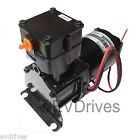
With a pipe system put together out the back of upper compressor housing, added new check valve, new Hubbel cut – in cut- out relay and a 90 degree turn to attach out bound compressed air.line.
This was Marathon factory install back then. Less air operated systems. and only place for water from operation of compressor was the tank mounted behind left front fender.

This tank had been once drained where installed,. Tank drain piped to generator bay for access. The tank contained so much crap it plugged drain line. Replacement tank found at Grainger.
Looked around at other tank options but opted to stay with original set up, replaced tank and leveled bottom tank drain piping.

A water trap has been added onto the compressor with a manual drain. With a few leaks fixed in system compressor cycles once every 2 days.
Cut-in start at 80 lbs and cut-out at 110. Normal setting cut-out is 120 lbs.
That strange thing hanging on left side of compressor is air intake silencer as advertised and It works to quiet the compressor noise.
-
Al,
A water trap will trap condensate, but not the vapors contained in the compressed air as it leaves the compressor. The water trap may contain water from time to time until it warms up and condenses the water contained in the first flow of air, but after that it is condensing downstream
That is why our chassis air dryers are located in such an inconvenient location. The dryer needs the vapor to condense after it comes out of the compressor otherwise they would be located in a more convenient place for servicing, like in the engine compartment near the compressor.
-
Tried to get a little relief with constant water / vapor problem. This seemed to help along with leak repair and less run time.
What would you suggest to make it better ?
-
Either install a small coil of copper tubing between the trap and the compressor to make the air give up the heat of compression, or locate it a distance from the compressor with a plastic line. I think our chassis dryers are at least 15 feet away from the compressor, and I probably have a similar or greater distance from my aux compressor to the water trap. The same distance is good for a check valve if the check valve is not rated for high temps.
Somewhat related, my bus turbocharger is a compressor. It boosts air into the engine from atmospheric pressure to as high as 48 or 49 PSI when the EGR cycles but mostly at 28 to 30 PSI. The air immediately downstream I have seen as high as almost 500 degrees. Obviously some of that heat is transferred from the hot exhaust driving the turbo, but the heat of compression is substantial. I have never measured the temps of the discharge fittings on the bus compressor or the aux compressor, but I know you will not be able to touch it without getting burned.
Log in to reply.