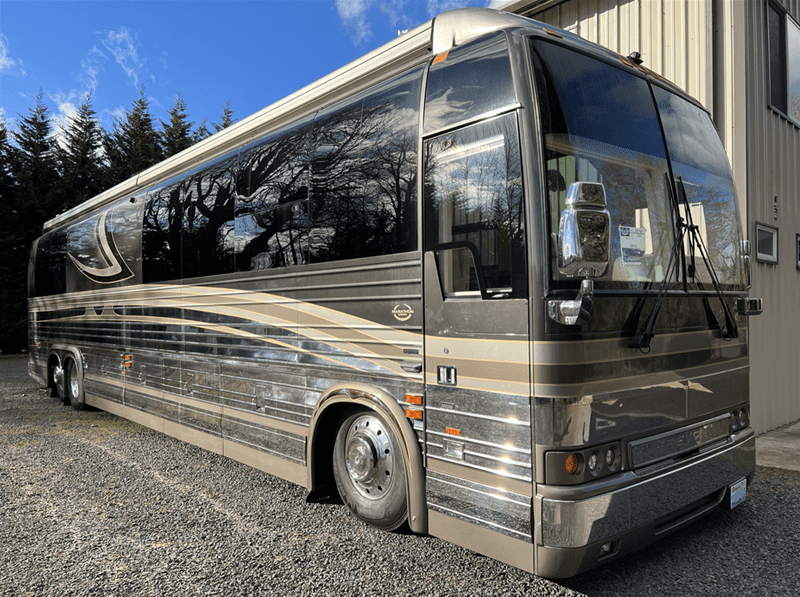
Things To Look For When Buying A Used Coach

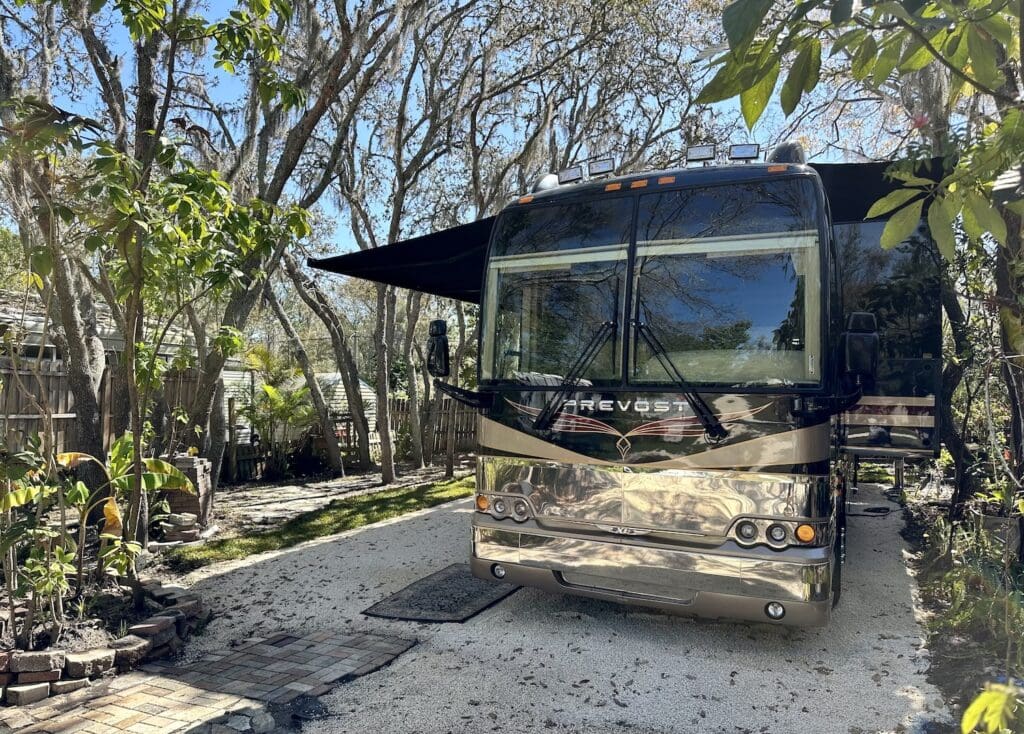
We see these questions all the time, and often the mistakes associated with not knowing, so I feel it may help to discuss things the look for when buying an older coach.
The problem as of late is that since the older XL/XLII models have come down in price as they have, people see that they can now afford to own “The Ultimate Class” coach. The problem is that a 10+ year old coach has costly maintenance items that will soon need to be performed, if not already done. Some people are shocked about the costs to get the coach that has not had any of these items taken care of, and quickly see that their budget is blown or far exceed.
When looking at a Prevost, I suggest you look at these items. The top three costly items to rehabilitate a coach for resale for us are: 1)tires, 2) batteries, 3) electronics, followed by rubber items (including air suspension bags, Norgren valves, brake chambers, and existance of air leaks). A common cost if none of these things has been taken care of normally runs $15-30k, and depending on severity and extent of air leak issues, possibly upwards of $35k total. If there are several windows that are fogged up from a break in their thermo seal, add further to that total.
If you are looking to purchase an older used Prevost, I strongly suggest without knowing the condition of these above-mentioned items, to plan on $30,000.00 excess budget to cover possible repairs needed.
Tires: the general industry-accepted standard is that the tires be Michelin, appropriately sized, and if over 5 years old, expect to replace. If the tires are mismatched brands, etc, beware. The Michelin date code is a 4-digit all numeric code. The first two digits are week of the year they were produced, and second two are the year of manufacture. Example: 1819 would have been made the 18th week of 2019.
Batteries: my personal pet peeve. Make sure the batteries are of the appropriate type for your coach! There are only a very select few Prevost conversions in which it is LEGAL to put vented liquid lead-acid batteries in for house batteries for several reasons. If the batteries are in a system that uses Trace 4000watt Sinewave Inverter/Chargers, you will be sorry if you have any other battery than a Lifeline AGM. If the house batteries are installed in a compartment (as most are) that is not COMPLETELY SEALED OFF from ANY source of a spark (i.e. inverters, transfer switches, parallel relays, contactors, etc) it is PROHIBITED under the National Fire Prevention Act, the NFPA, article 70, which for the laymen is the National Electric Code. Such installations MUST have ignition-proof, sealed batteries, which means either AGM or Gel.
The standard cheap battery you buy at NAPA, Interstate, etc are less than half the price of AGM or Gel-cell batteries, but are a fire hazard in a compartment storage compartment of a Prevost where they are not sealed from the rest of the compartment. The older series Country Coach conversions are the only ones I can remember seeing that were installed in an adequate compartment to allow regular vented liquid batteries, but they are still not installed in such a way that a customer will be able to check the liquid electrolyte level monthly. Remember, vented batteries will dry out and you will need to add distilled water regularly. Water evaporates! Especially in the summer. There are Liberty, Marathon, Vantare, and Parliament conversions with the batteries located in a vented rear compartment behind the tag axle, but the same applies: They are impossible to access to check water level if vented liquid batteries were to be installed.
You don’t get something for nothing! If you install or a previous owner installed the “cheap” liquid batteries, plan on having to replace them every few years because that’s how long they will last.
Air suspension bags: If they have cracks deep enough to stick a quarter in, they need to be replaced! At that point, expect that they all will need replaced at the same time or shortly thereafter.
Brake chambers: Remember, there is a rubber bellows inside that makes them work. Rubber rots/wears out over time. Noticeable air hissing around the drive/tag axle area with the park brake off are indications of failures in these.
In summary, remember, this all may sound overwhelming, but when making the purchase of an older 10-15+ year old coach (of ANY type/make, not just a Prevost) these maintenance costs need to be in the forefront of everyones’ minds. If these repairs and replacements are not in your budget, done with the right parts and expertise, you may be better off not to make the purchase at all. As amazing as a Prevost can be, it is more beautiful when it is working properly and being thoroughly enjoyed.
At Prevost Community, we are very proud to be one of the largest resources to answer these and thousands of other coach related questions.