
-
SF to Seattle!
Posted by Jay on September 23, 2018 at 8:15 pmHi all.
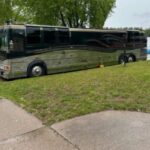
My buddy has an ’89 H5-60 that he bought about ten years ago. It’s been sitting in CA ever since and now we’re gonna bring it up to Seattle to do a bunch of work on it. He’s been maintaining it, but it hasn’t been out on the road in five years.
I’ll be the one driving it since I have a CDL and am comfortable driving a bus, but it’ll be a long drive and I want it to be as uneventful as possible. I’ve got the operator’s manual and I’ll spend the next couple of weeks doing my research, but I thought I’d come here for advice, if you don’t mind.
I’ve driven a 60′ articulated city bus, a couple Prevos for a private bus company and I currently drive a Duck. But I’m not a mechanic.
If you were going to go get a bus that hasn’t been driven regularly for many years and take it 800 miles and over a couple passes, how would you prepare? I’ll make sure there are lug nut indicators and make sure the transmission retarder is working properly before I go head over any hills, but I’m not familiar with this particular vehicle.
Any advice would be greatly appreciated.
Thanks!
Archived replied 7 years, 11 months ago 19 Members · 32 Replies -
32 Replies
-

Sign up for Roadside assistance/Tow plan and bring your VISA card preferably with a large limit.
Sounds like an adventure! Keep us posted on progress.
-
What is a lug nut indicator ?
Has’nt been on the road in 5 years….what could possibly go wrong?
Age of tires, leaking wheel seals , seized brake parts, overheating engine, starting batteries, belts dried out, transmission failure due to moisture, Prevost system air leaks.
Sign up for the Coach Net Gold road service plan.
AL
-
Wow, a 30 yr. old coach that hasn’t been driven in 5 yrs.
Hopefully, your friend will follow you in another vehicle and/or you should be pulling a tow vehicle in case you get stranded.
We are wishing you the best of luck, please post back with your experience.
Safe travels,
Mark
-
Check the date codes on ALL the tires. If more than five take a deep breath.
Has it been started and run over those five years? Even if it had been, I’d give very serious consideration to new batteries.
This is just for starters.
-
Thanks everybody.
We both have premier AAA but I’ll check out Coach Net Gold.
He’ll be driving another vehicle the whole way and we’re giving it a few days to get ready and we’ll take it slow.
Lug nut indicators- don’t know if this applies, but with the Ducks and buses I’ve driven there are plastic markers on the lug nuts that make it obvious if the nuts loosen.
I’ll definitely check the dates on the tires.
The bus gets started regularly and has been driven periodically but this will be the biggest trip in five years, for sure.
-
I would do a full 50 mile test run staying close to where the bus is stored. That way, if it begins to fail, you might limp back to home base…… but before doing so, I would get a full set of belts and a small supply of hoses among those being heater hose. This may sound strange but I would also carry some copper tubing and clamps so that the tubing can be inserted into a hose that bursts and then clamped on each end…. i.e. if a heater hose bursts, you can road side repair it.
It will be hard to know but the transmission may be the culprit with the most likelihood of major imminent failure. I would certainly have the coach lubricated before the trip …. all wheel bearings checked … etc.
I do not know how you plan to handle leaks if they occur?
Some time ago, a person owned a 12 year old Newell that had been in storage for three years. They cranked it and filled it with fuel thereafter leaving Houston for Florida. They made it about 75 miles…. the transmission simply failed.
Pres
-
A bunch of different sizes of copper tubing for roadside hose repair! Wouldn’t have thought of that.
Thanks!
-
Just hire a wrecker to follow you…..saves on response time.
-
Drive it like you stole it !! Have large bank account !
-
If I were to make the trip there would be a comprehensive pre-trip inspection including a DOT brake check. Ideally I would have access to the underside of the coach and I would look for leaks. The DOT check would reveal air system leaks, but you would need to visually inspect for coolant, fuel, oil or hub seal leaks.
I would inspect the tires and my guess is they are going to be old. In a perfect world they should be replaced with current date code tires, but if that is not likely I would carefully inspect for sidewall cracking and if any use the Michelin photo array to determine their acceptability for use. I would insure the tires had the correct air pressure for the weight carried.
If possible I would feel all coolant hoses for a soft or spongy feel and replace any hoses or clamps that were questionable. I would replace all fuel filters. Ideally I would change fluids, including coolant, oil and transmission fluid. I would change oil and transmission filters and cut open the old ones to check for signs of metal.
Usually relocating a coach like this the luxury of replacing items that do not age very well might not be feasible, but at the very least I would want to know where and how to get critical spares or have some to carry. I am thinking of air bags, brake chambers or brake chamber diaphragms.
Obviously I would carry ample fluids such as coolant, oil, etc.
Differential and hub oil levels are important and I would insure they are all full. The hubs in the non-driven axles should not be overfilled, but should be filled to the oil level ring on the hub cap.
If the tires are aged and not going to be replaced carry spares, mounted if possible. Make sure you have the tools to not only change tires, but a selection of common tools just in case.
Do some internet driving and identify and print out locations and contact information for Detroit/Allison dealers, tire shops, and tow companies along the way or at least have internet access with you just in case.
We all want perfect coaches, but ferrying older coaches is a whole other world and all that can be done to minimize risk should be done within the confines of what is likely a modest budget. Under no circumstances would I pass up opportunities to do a pre-trip inspection all over again at every rest stop when I would get out for coffee or fuel.
Make sure you have plenty of fuel filters and the tools to prime and change them unless you know for certain the fuel is clean and free of water.If there is any way possible, before departing I would get some local miles on the coach to test for water or dirt in the filters that are on the coach. An 8V92 can be primed at the port where one of the fuel filters mounts so I would insure I had a means of pushing fuel under pressure through that port in case a fuel filter gets plugged with dirt.
Make sure the batteries are strong. Make sure the electrical system is OK and if there is any doubt look for corrosion, bad grounds, etc. all of which will shut you down.
Have fun, enjoy the ride.
-
Maybe it’s cheaper/safer to have it towed or flat bedded. Get one of those Wide Load signs!
-
Thanks, Jon. And thank you for the articles posted here, particularly the one about listening to your coach. There’s a lot to absorb there so I’ll be reading it a lot. And we will definitely zero out the maintenance when we get it up here.
-
It might be smarter to tow it up but I’m looking at it as a shakedown cruise. I’ll be putting a lot of miles on it and the sooner I become one with it the better.
But we’ll be safe and not rush anything.
Thanks.
-
One other thing I would do. See if you can get a listing of bus folks along your intended route. The folks on this site are risk averse and a lot have not worked on their coaches, but some have and some are very capable and willing to help someone in need.
But also post your route on some other bus sites like BNO and BCM and ask for contact information for folks along the route. The sites mentioned above are populated to a considerable extent by bus owners that do almost all their own work and there is nothing better than a guy that has tools, knows how to use them and most of all knows all the local shops that might have needed items.
A lot of folks on the other sites would likely tell you to kick the tires, light the fires and go. I think you should do what I stated in this and the other post because I do not consider breakdowns an adventure.
-
Braveliver, I am in the process of converting a 1998 H3-41. I live in Corvallis Oregon about 10 miles from I-5 (mile post 228). At the least, I would like to see the coach as you travel by. If you need help, I am familiar with repair facilities and I can turn a wrench. Any guess on what day you would be passing through?
If you can make a couple hard test trips of 100 miles before you leave any major issues will be seen. Green lights and dry roads!
Bandsaw
Log in to reply.