
-

Our air systems all differ slightly, and that difference is predominantly how the converters plumbed the conversion. Over the years there have been discussions about the aux compressor or aux air system backfeeding to supply brake pressure. One owner demonstrated his coach would do that. What I don’t know is if his aux compressor was set up to do that intentionally, or if it was the result of a failure of check or protection valves in his coach.
To those who want to know how your coach is set up I would strongly suggest the following:
Start with a bus whose air systems are at full pressure and drain each tank individually. This should verify that as each tank in line maintains air pressure that the systems protection valves and check valves are working. I can do my tank draining from either direction and in both cases I still have pressure in the next tank in sequence. Prevost calls for tank draining starting with the wet tank and going downstream.
Once you verify the protection and check valves are functioning, bleed all your air systems to zero. Then turn on the auxiliary compressor that was installed by the converter. Prevost does not supply aux compressors.
It is probable you will see your aux system go to the regulated pressure and the compressor will kick off, but the primary and secondary systems will remain at 0 PSI. Some may see air enter the brake systems, but do not assume your aix compressor will ever be able to manage to maintain pressures because its output is significantly less than that of the engine driven compressor.
-
For
those non Marathon owners, you may want to just skip this or your
head might explode.:)Grizz
– I figured it all out after reading your last post. Mine is
different because it was modified by Marathon when I was at the
factory. My bus originally had a 12v compressor for the Marathon
side. While having some work done before heading home, we discovered
the 12v pump was in-op and the breaker was thrown. Turns out the
motor was shot. Marathon then disconnected the 12v pump and coupled
the line so I would have air with yellow valve open for the trip
home. I found a piece of tape that said, leave valve open while
driving. So the 12v compressor hadn’t worked in some time. I flat ass
forgot about the 12v pumps function in all this air stuff. So I could
just leave as is, forget the tank and use aux air and life would be
good. Nah, I’ll put it back to original for the next guy so it’s not
molested.So,
I’ll put in the new tank when it arrives and then add a new 12v
compressor getting it all back to factory. When that’s done, I will
truly have two separate systems independent of each other when the
yellow valve is closed. The Marathon side will have the 12v
compressor with it’s own tank and regulator and the Prevost side will
have it’s own big compressor, the one installed on the generator
by Marathon. And, I’ll still have two freaking tanks to keep
drained.But,
if you have the Marathon steel tank, round or pancake, you better
check it out for deterioration and rust..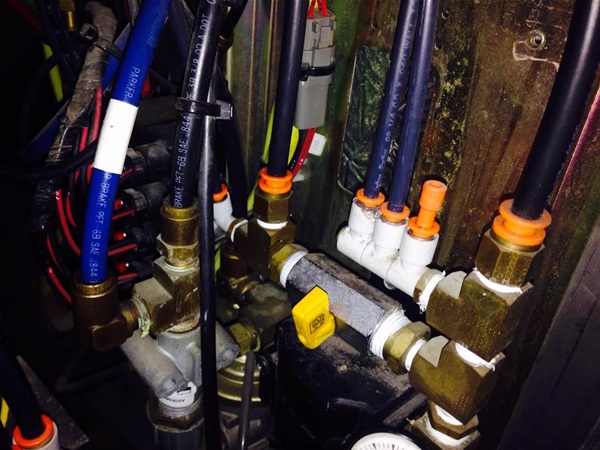
Yellow valve ties in Marathon air with Prevost aux air, normally closed.
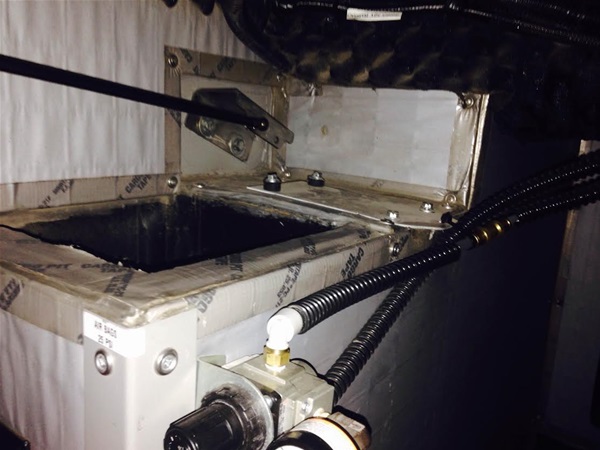
Original location of 12v compressor – rear bracket with 4 bolts
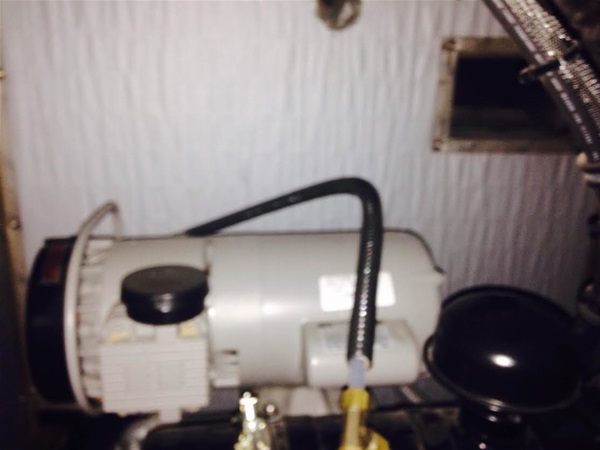
Aux compressor mounted on top rear of gen.. Not a good place in my opinion..
-
Getting access to Marathon AUX tank requires removing left front fender; three (3) bolts inside wheel well.


Removal of panel above to right exposes access to AUX tank

AUX tank with a mess due to someone removing drain hose in this compartment.

This entire area must have been wet leaving the signs of water and rust

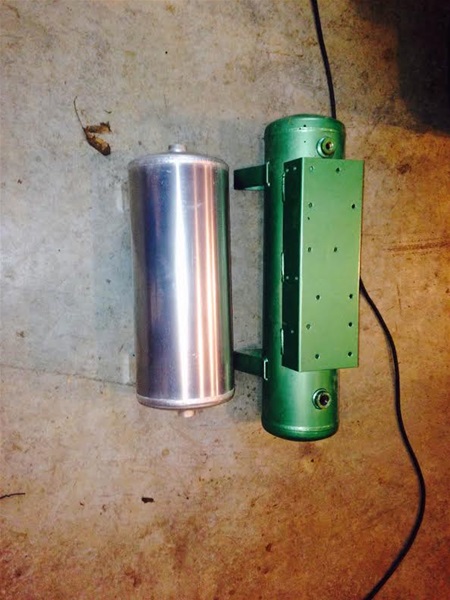
Old tank on left rated 4 gallon, new rated 5 gallon purchased from Granger. Just slightly taller fits through the hole we’ll make adjustments. Tank dated 1998 original. probably.

Remounting will go from 4 point to 3 point. Will use existing mounting noise dampening rubber mounts. Holes on straps need to enlarged from 1/4 inch to 3/8 inch.

Template for base mount of new tank with three mount pads.

I’ll use the forward existing mount pad (5 o’clock position) to set tank. Then drill 2 new holes using template. I can adjust to line up black drain line at 3 o’clock position.

Enlarge hole for old base pad in new tank.

During the clean up I found the drain line contained enough rust that it restricted air low about 50 %. at drain valve.
Shaking the old tank you can hear noise inside tank, probably from tank rusting inside.
It was time for a new tank.
-
Nice job Big Al….
Mine is done also and that piece of crap drain wheel got replaced with a ball valve on mine. The aluminum tank weighs next to nothing compared to the old steel tank, is shorter and bigger around, but has the same capacity.
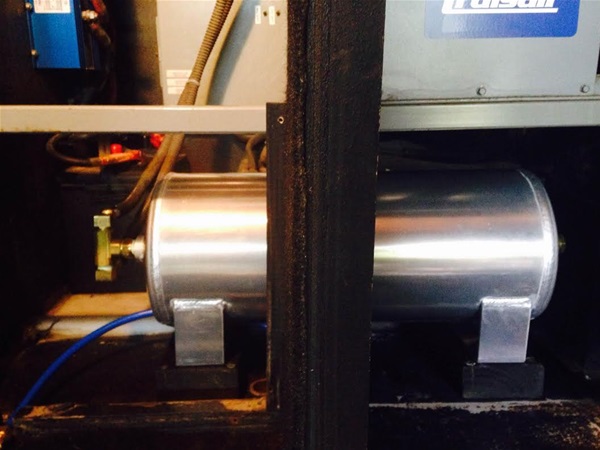
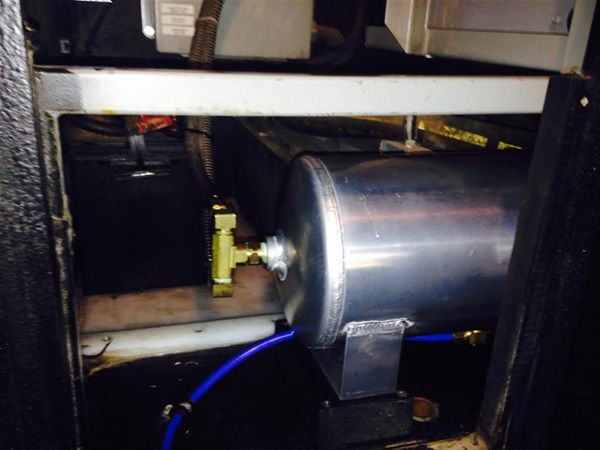
-
Tom…in post-picture dated 10-15 I see a plastic white manifold valve. If you get a chance check for air leak.
These plastic adjustable valves are not reliable. The air leaks at the swivel joints.

This 6 gang was in our 2005 which at first was rebuilt. after a couple of months leaked again.
-
Tom, do you have anything to tell us? You posted that you would put it back to original for the next owner….are you ready for OTR? Slides?
-
What r u doing up so early Jeff???? Like me can’t wait to go to work!!!!!!!
-
Al – They’re non leakers at present.
Jeff – Stirring up trouble again I see….
-
OK Big Al, I’m done are you? Check out my new drain instead of that crappy wheel…
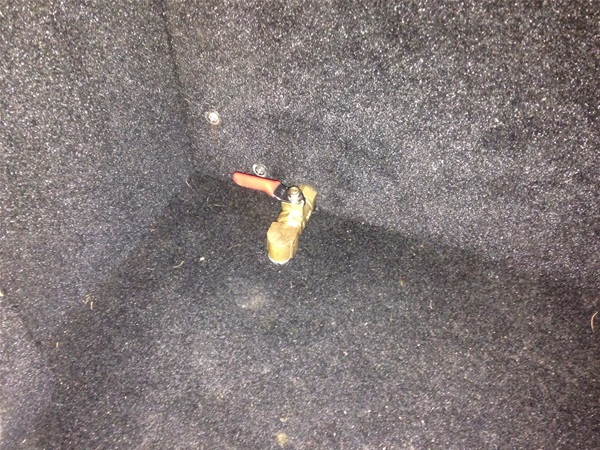
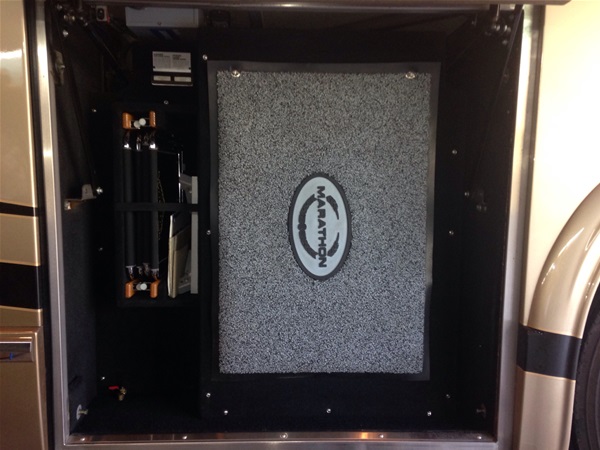
-
I’m curious, when you drained your Marathon Aux tank, was
there any evidence of moisture or sediment? Mine is a 98, looks to be stock and is dry as a bone when emptied. Everything seems to be working as it should.Interestingly, I don’t have a yellow valve or see any
writing on any yellow tape. I wonder if it’s an H thing, or perhaps a change
added after my vintage. I’ve been working with Leon and Chris with my Marathon Aux
system in Coburg and over the phone and email and they’ve never mentioned it.For sure this will be added to my Marathon list this spring.
-
Kevin,
You may be good with your vintage and sounds like you don’t have the dual aux system. My 97 Marathon didn’t have it either and if I remember, the Prevost aux air did everything just like most of the other buses I have had. Not sure when Marathon did the seperate tank, but Al’s has it and his is a 2000.
-
I don’t have a Marathon, never did, and don’t know anything about them. But………the gist of the discussion however is not really about an extra accessory air tank, but moisture in a tank.
If the Prevost air system is well maintained, meaning routine tank bleeding and regular air dryer cartridge service it is improbable you will ever see moisture or condensation coming from that part of the coach. But just as well as the Prevost system will do at keeping the air systems dry, the on-board auxiliary air compressor will make water. This applies to any coach, any converter, any system.
The requirements when relying on the aux compressor, especially for extended periods is to frequently drain the water traps or “spitters” to keep moisture from the accessory side of the systems. I suspect all converters had their own way of dealing with moisture so it might be necessary to get specific recommendations from the converter or other owners who know the specific system.
-
Jon….I’am really sorry to hear you never owned a Marathon. With our help we could make this happen.
My Marathon AUX tank was original. The replacement idea started when opening the drain line finding it would stop draining. Back blowing the line it would start again and then stop. This was the dirt and rust from inside the tank discharge air line.
Back on this thread is the replacement story of our original tank. I believe years of probably not draining caused the issues of rust and rust colored water.
Shaking the old tank removed from it’s mounting sounded like marbles inside. I’am happy to have the replacement behind me. It was a little touch and go finding a replacement tank. At one point I was going to buy a compressor from Lowes just for the tank.
If two (2) cruise airs were not located behind the front bumper that’s where the AUX tank would be mounted today.
Grainger carries replacement pancake and hot dog style tanks.
Log in to reply.