
-

Ed / Sandy,
Am I looking at the photos and interpreting them correctly? Some pieces I see of the adhesive / sealer are so perfectly formed it almost looks like they were just lifted off the stainless panel. That seems to indicate there was little or no bond.
The other piece(s) might be a little scarier. Am I correct in assuming what we are looking at is rust that has flaked off the frame of the coach and bonded itself to the adhesive / sealer? If so how can that damage and future damage to the frame be stopped or repaired?
Very disappointing to see those photos.
Did your skins need to be removed? If not how can the panels be rebonded because if that is rust from the frame nothing is ever going to stick or adhere to that? Was this damage the result of an adhesion problem that was not repaired immediately?
Wow is all I can say. Houston, we may have a problem.
-
The first thing we do when we are looking at an XLII to represent is to check for loose panels. We have an 06 Elegant Lady Liberty that had a few minor loose areas, and it was sent to Prevost for repair prior to us offering the coach. We have seen quite a few coaches with the panels removed. Generally the original adhesive sticks to the paint/primer used on the chassis, and will sometimes pull it off exposing the bare metal below. The coaches that I have seen have had little, if any corrosion on the bare steel. I would expect that any minor surface rust would be removed prior to installing new panels. On panels that are being repaired instead of replaced, it would be difficult to remove the corrosion if it was significant. The few repairs we have been involved with were on western U.S. coaches, and there was no evidence of corrosion when looking at any exposed metal with the existing panel pried up with a small wedge. My guess is that the corrosion on Ed’s coach was from the tough environment of Florida, and the Keys. The biggest problem with loose panels is water intrusion, and our belief is that a re-gluing of the loose panels should solve that. If a coach is operated in a harsh environment such as Florida, or driven in the winter on roads where salt has been used corrosion could be an issue. If you have a coach that has obvious delamination it should be addressed as soon as possible. Our feeling is that Prevost has done a good job in standing behind their products. We understand that the current economy makes it tougher for everyone, and it is unreasonable for a company to warranty a product as complex as our coaches indefinitely. We also sell manufactured (fiberglass) coaches, and they to can have environmental issues that effect the skins, roofs, etc. Website’s such as this can be a good resource for potential buyer’s to learn what type of things they should look for when buying a pre-owned coach. These are still machines built by man, and as good as they are there are still things that can go wrong. My belief is that a quality Prevost conversion is still the very best motorhome one can buy, as Prevost likes to call it “The Ultimate Class”! The 2 most important things when buying an used coach, is who you are buying it from, and how was it cared for before. Many times service records are not available, but a proper inspection of the coach will give you good insight as to how it was maintained. If you are looking at a coach with significant panel issues, that would have a dramatic influence on it’s value. If the panels are tight, and the coach is mechanically, and cosmetically correct then it should bring top dollar. I always tell our customers, and I truly believe this, you are better off to overpay for the right coach, that to steal the wrong one.
-
“You are better off to overpay for the right coach, that to steal the wrong one.”
That has to be the most important piece of advice I have ever read on any forum relating to coaches. I just wish I said that. That was a good one Steve.
-
Quick note here before Ed reads the last two posts,,,,”he is slow at getting to this forum and posting”.
Our bus is NOT stored here in Key West. Believe me, when it comes to packing & going on a trip, I wish it was! Anyway, we store our bus in midddle Georgia and covered. The bus came from Northern Indianna when we purchased it and it had been there for years. So the Key West climate is not a source here.
Now, I will let Ed go from here. Believe me though when I saw all this, I almost had another heart attack!!
Sandy
-
Thanks Steve, it’s good to hear from someone on the sales side.
-
STEVE…I think Sandy has answered most of your questions. My feeling does not parallel yours. Prevost is ducking the problem as best as they can. Does anyone want to answer the question,”why a cut-off is at 5 years or 6 or 7″? It is obvious that the expotential rate of failure repairs would skyrocket as the owners finally discovered what was going on. When we purchased our 2001 Royale, I had some knowledge of the panel delamination so I did my du-diligence by contacting Royale Phoenix. I was told Prevost had sent a crew to their plant and repaired ALL buses in their stock. I have since been told by people at Marathon, that when it was pointed out to Prevost back then, the epoxy was too hard and not flexible and that Sika would be a better repair fix. They were told to continue using the Epoxy anyway. Guess what they are NOW using, 12 years later, to do the repair? SIKA
JON…. I made a video of sliding a knife across the bottom of a panel with little or no resistance. Yes, the rust shown in the photos is on the frame side. The Non-rust side is the panel side.
The 2 coaches being repaired, which I watched at Prevost JAX, they did not remove the panels. If that had been done, the risk of damage would be too high and new panels would have to be used. Therefore the cost would have increased to over 60,000 to $70,000.
Unless you are an attorney… You are going to be content with the”behind teat”.
As Tom states, “Rivets Rule”.
CAPT MOGUL (Ed)
-
I concur, Jon, but when I asked specifically for them to check and they say that they did, they kind of own the problem if it shows up. That’s all I am saying….
-
Karl,
Not true. At the time the coach was checked and verified as being OK that ended the seller’s responsibility. Forget about the skins for a moment and instead apply the same logic to the engine. If part of your purchase agreement was to be verification the engine was in good health, and it was in good health because you had XX months of trouble free performance, why would you expect anyone to own the problem if the engine developed a glitch a couple of years after you bought the coach?
The same could be true of every part of the coach. From leaks in the roof to leaking air bags.
Most importantly is the fact you bought a coach from the converter as did a great number of owners. Just because they say the Prevost chassis, or the engine, or the transmission is in great shape, that doesn’t mean because they said that they are obligated to repair any of that if problems should arise at a later date.
To put it in medical terms, if a physician ties a women’s tubes (those are probably layman’s terms) and the woman gets pregnant will the physician volunteer to provide total support for the child to college graduation even though the procedure worked for 10 years?
-
I got to agree with Jon on this one. All of our coaches were in great shape at one time or the other , and we try to keep them that way but sometimes something bites us in the rear, as good as our buses are made they do have issues once in a while and they are just part of being an owner, that said, the issue of delamination is a hard pill to swallow, and how Prevost came about with the year to do or not do repairs, is a little frustating to say the least especially if your coach is affected, I feel when it comes to delamination, they should help even if the coach is vintage! Car manufacturers do recalls all the time, but the remedy is usually a fix for the problem. Gary
-
Tom, I sure hope so, have not had any issues yet but with the cut off date that Prevost has maybe I should get it checked out what do you think? Gary
-
I would imagine most people on this board don’t want to hear this (including myself) but Prevost may have an issue of which the handling of the delamination is only a symptom.
For many years, I drove almost exclusively new and classic Mercedes-Benz vehicles. It became apparent to me about 1990 that they had ‘lost their way’. IMO, the quality of the product and service, while not terrible, had declined substantially.
Jon: An engine wearing out or failing is not the same as a design defect affecting a large percentage of a product type. Actually, however, I do believe DD should be repairing free of charge (I don’t know, are they?) wrist pin failures in the early S60’s regardless of when they occur. Prevost should be handling the delamination issue regardless of the age of the coach…if they can’t redesign/retrofit successfully, carmakers now have to ‘buy back’ lemons.
I am saddened to say that I have seen the quality of customer service decline over the past several years at my Prevost service center. I sincerely hope that this fact and the irresponsible manner in which the delamination issue is being handled are not an indication that Prevost has ‘lost it’s way’.
-
Joel.
You are correct. I used the engine as an example only in the context of the seller not being able to stand behind a product or device forever because all they can say is that it is working as intended right now.
I am directly impacted if the delamination issue has not been resolved because my coach is one that had repairs. I do not want to find out now or when it reaches 10 years of age, or far in the future the delamination issue is still a problem. I am no different from any other XLII owner. Having had 2 rivet coaches previously and used them and the Prevost service experiences I had in the past as benchmarks I would be disappointed to learn a formerly bulletproof skin design had been replaced by one of questionable worth and not supported. I am sure all XLII owners feel exactly the same.
Having lived in the corporate environment in a previous life I seriously doubt the folks at Prevost are plotting how to cheapen the coach. In fact the more I learn my coach the more content and quality I see in it compared to my previous coaches. I see the skins as a blemish on an otherwise great product. My bet is that Prevost has not turned its back on its market and they are likely as frustrated as some of their customers are. I suspect if there is a permanent fix, as durable as rivets we may all be able to put this behind us.
-
Jon, I was with you until you got to the medical part. The bad thing is about tying tubes you ARE on the hook if she gets knocked up later. They sue you under the heading of “wrongful life”!
Also, I probably wasn’t clear in my earlier post. While I totally get your point, mine was based on the assumption that if the delamination was going to show up, it showed up relatively soon. Since mine is almost 9 years old I would think it would have happened by now if it was going to.
-
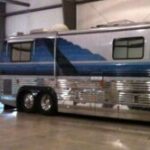
The way I understand it, even if there is a clean bill of health upon inspection, there is a chance of a loose panel going forward and it never goes away. So unless I’m mistaken, stands to reason that the only one’s that will hold up over time and not become an issue, are the ones repaired with rivets. I know of some that have been back for loose panel repairs more than once.
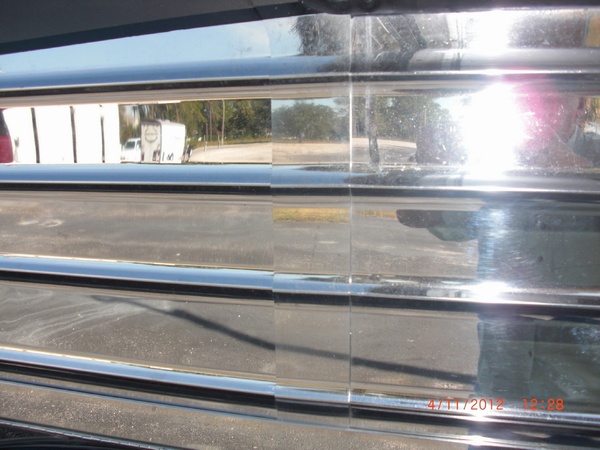
This Marathon will most likely never have another problem, because under the stainless strip is a row of rivets.
Log in to reply.