
-
Fire Extinguishers
Posted by Art on December 15, 2019 at 5:41 pmWhat is a good fire extinguisher to carry on bus for just in case?
Bernie replied 6 years, 10 months ago 9 Members · 9 Replies -
9 Replies
-

Art, we carry several,
A small EOM by the door, small one under the sink, a large one (5 pounds I think) in the first passenger bay, another small one in the second passenger bay, and another large one in the back closet along with a First Alert fire ladder. Got to get out quick and safely.
-
Fire Extinguisher Recall
The recall of millions of Kidde fire extinguishers . The recall involves models of Kidde extinguishers with plastic handles that were manufactured from January 1, 1973, to August 15, 2017. The fire extinguishers can become clogged or require excessive force to discharge and can fail during a fire emergency. To determine whether you have an affected model and to request a free replacement fire extinguisher, contact Kidde at (855) 271-0773 or visit http://www.kidde.com and click on the “Product Safety Recalls” box.
Two of my extinguishers were replaced by this recall.
-
I can speak with some authority about fire extinguishers.
Whatever you have is unlikely to big enough or you don’t have enough of them. We were told of an engine fire, pulled over immediately and despite using 5 of the on board extinguishers, and watching several truckers use up their extinguishers we learned once something gets hot, and as long as there is fuel for the fire nothing but lots of water will get the job done.
I have no knowledge of fire suppression systems or different types of extinguishers but I can say get at the fire early. If it is being fed by combustables including fuel or freon an extinguisher will temporarily quench the flames, but any hot mass, either red hot metal or embers from hot cabinetry is going to need to be flooded.
We saved the coach by draining water from the water tank into pots and then flooding the hot areas with a lot of water. Just the fiberglass housing of the tail lights had a lot of heat and the clutch on the OTR compressor was cherry red and was an ignition source until both were flooded and cooled with water. Extinguishers had little impact despite the significant number of pounds of chemical used.
-
And the photo Jon shows is the reason I disconnected the auto-electrical lock on the back door curb side on my H so that it remains unlocked when I hit the entry door lock and everything gets locked down. That rear door door must be opened to open the back. In the event of a fire your brain will be thinking get the fire extinguisher instead of “unlock the bay doors”. So you run back 45 feet, grab the door and oops, it is locked, so run run back 45 feet to unlock the bay doors, then run back 45 feet just to discover that you put down the fire extinguisher when you unlocked the bay doors, so are standing there with nothing in your hand. If I decide that that door needs to be locked when parked to prevent someone like Tom from opening the back door and flipping the rear start switch to off for a practical joke, then I can use my key.
-
I should mention if you are in the coach when you realize there is a fire, GET OUT!
When we had the fire we were traveling with Di’s sister and her son. As soon as I got pulled over I was very lucky because the first time I hit the buttons the floor slide and the door lock stayed where they were. I hit the buttons a second time and fortunately the floor slide opened and the door lock released. Immediately after that the entire electrical system failed.
I jumped out to determine what was going on, having grabbed an extinguisher on my way down the steps. I used it (to no avail) and realized the two women were still in the coach. Only after I yelled at them to get out did they move. They had the deer in the headlights look and had been frozen in place.
I made the mistake as I was getting out of the coach in assuming that leaving a burning bus was an obvious requirement and never thought anyone would be so frozen in panic that they would have remained.
This is serious. Review what you have to do before you are faced with the real thing. The very first thing to do is get to safety, and then after thinking about the situation take the next steps. It might seem unimportant to review what to do in emergencies, but if you do not it could compromise safety. Make sure everyone knows where the fire extinguishers are. Make sure everyone knows to get safe before determining the next step. Make sure everyone knows how to get out of the coach if the door is jammed or cannot open. Make sure everyone knows it is OK to break or kick out windows if needed.
Buses can be replaced.
As a footnote my nephew and I used every fire extinguisher, plus several truckers used their, but only after we kept throwing water collected in pots by draining the water tank did we get everything cooled down enough to extinguish the fire. The fire department arrived about 15 minutes after we got the fire out. Had we not been successful the entire bus would have been consumed in flames. As it turned out there was not only no interior damage, there was not even an odor of the fire inside the coach. When it was towed to Prevost Jacksonville and we plugged into shore power 100% of the house 120V electrical system worked. We had no DC power at all, but everything else worked.
Nine months and $82,000 (2004 dollars) later the coach was back on the road.
1999 XLV X-6872, liberty #440 -
Did you say the OTR clutch caused the fire? What is the leading cause of Prevost fires?
-
Saw an ad the other day for the element E50 extinguisher…I’m sold. I watched their video and anything that will allow me to put out a fire without messing up my tie I’ve got to have!
BTW, I have my floor slide and door air lock disabled for safety reasons.
-
After reading Jon’s comments I realised that I don’t know whether there is an alternate way to open the air lock on the entry door other than the electric button on my dash. If electric has failed what do you do to open the door. Obviously kicking out a window would allow escape but is there any other way to unlock the door?
Doug
-
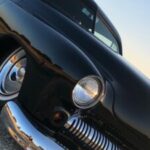
The cause of the fire I believe was associated with the A/C compressor. We were headed to my mother-in-law’s 85th birthday party in FL from Knoxville. I had a lot of work that had to get done, and on a pre-trip check several days before the trip I realized the OTR wasn’t working right. Since I had too much to do I had the Carrier dealer in Knoxville take care of it and they determined the compressor was shot. At least 2 cylinders were scored and not working and the reed valve on another was broken so since they had a new compressor on the shelf I asked them to fix the system.
When I went to pick up the coach at the end of the day it had the new compressor, the system was blowing cold air, but they left off the unloader valves that were installed on the original. We argued about that and I was informed they have had extensive training and the system pressures would never reach a point where they were a problem. I think the unloade valves limited internal system pressure to 450, but cannot remember for sure and they made it clear to me the system could never get to that pressure.
Based solely on what I saw while fighting the fire, the compressor had locked up at some point and internal system pressures blew the seal on the compressor behind the clutch. With the engine driving the fan belts on a locked compressor they caught fire and apparently were the ignition source for the freon in the system and the oil it was carrying. It was literally a blow torch of flame coming from the seal and the clutch was cherry red. The flame was like a flame thrower and had spread past the clutch and it ignited the vertical tail light housing and spread the flame further.
The fire spread up to the top of the engine compartment, curved forward and started the batteries and engine compartment wiring on fire. It melted 4 chassis batteries and 6 house batteries as well as burning 100% of the insulation from battery cables and wiring.
The OTR system holds about 24 pounds of freon so it had a large supply from that to fuel the fire. I burned my hands opening the side engine door and then did it again unhitching the toad, but fortunately the damage was limited to the RH side at the batteries, but it did destroy the rear wire harness, the tail light assembly on that side, and the rear cap.
I explained everything to my insurance company and provided them with the receipt for the compressor replacement and Prevost told them the unloader valves are vital, so I presume my insurance company ended up with Carrier picking up the cost.
Log in to reply.