Prevost Community Forums

Find answers, ask questions, and connect with our
Prevost Community around the world.

  • Converter Air Line

    Posted by Thomas on December 8, 2012 at 5:55 pm

    We have a 2000 XLII-45 Vulcan Conversion entertainer, I have been dealing with a ride height/air hiss issue for over a month. I have replaced the air dyer (SS1200 Wabco) – replaced all 5 stems(5 port norgien), verified 24 volts at the valves and checked for leaks at all air bags and leveling valves. Have been getting great advice from Bill Jensen at Prevost but currently at a loss.

    The coach goes up and down manually but when in an odd position and switched to ride the bus will not level. I can hear air pushing through the lines and have removed the two lines at the tee of the middel valve to verify air is passing through.

    When listening in each bay I can hear air hissing when in ride position but stops when moved to front/right/left postions.

    When I turn the bus off I can hear intermittent buzzing and small air release, pin pointed to a saddle valve labled converter, When I close this vlave the hissing/buzzing stops and when the bus is running with this valve closed the bus then levels.

    Question is where does the single air line that leaves this valve labled converter go and what is its purpose?

    The other thing that happens is the AUX guage builds up to 120 then blows of air then the guage drops to 90 in 5-7 seconds compressor kicks in and build back to 120 in about 15 seconds and repeats continually while in ride position, when in front/right/left position the guage builds to 110 and holds.


    Archived replied 13 years, 9 months ago 7 Members · 9 Replies
  • 9 Replies
  • gary

    Member
    December 8, 2012 at 6:37 pm

    Don’t know about your conversion but it sounds like a pop off valve and the compressor start stop valve are not balanced in their adjustments.

    You must first determine the pressure you want to hold in the tank/system then adjust the pop off to hold pressure to some point higher than that.

    Adjust the compressor start stop switch to start at the lowest pressure you want to allow the system to go down to.

    Adjust thecompressor off switch to stop the compressor at a little under the pressure set on the pop off valve.

    The compressor start stop switch commonly used is a “well pump switch” and available at Tractor Supply, Ace Hardware, Northern Tool, WW Grainger and of course your neighborhood well service co if you live an a rural area.

    This is not complicated, the pop off valve usually has a tapered valve to a seat, held closed buy a spring the spring pressure against the valve is adjusted by a threaded rod and locked in place by a lock nut at the pressure you desire.

    The well switch is adjusted with a nut moving an arm to actuate a micro switch.

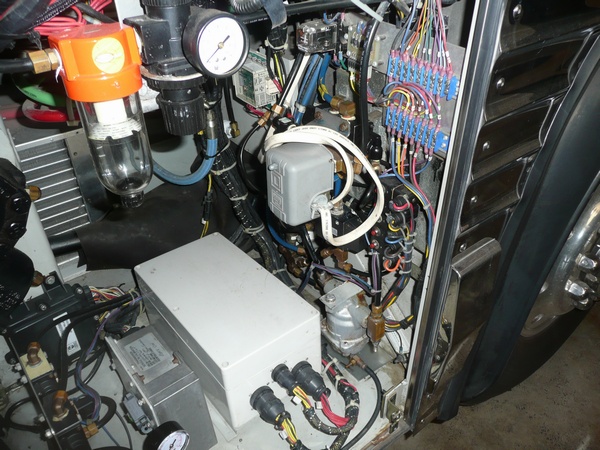
    The switch is the grey cube with the white wires going to it.

    JIM

  • AL

    Member
    December 8, 2012 at 7:07 pm

    It is impossible to diagnose anyone’s auxiliary air system for two reasons. First, unless someone actually knows how the converter set it up there is no way of knowing how and where the system was tapped into and set up. The only way to chase issues is to follow the air lines, something that sounds simple, but is not.

    The second problem is as coaches age, various people work on the coach and once they start modifying it for various reasons, even the converter’s system design logic may no longer apply, reinforcing the need to folllow the air lines and draw out the system to see where and how various connection points are and what components are in the system.

    To address the specific issue of the coach not wanting to come to the driving height without hissing or going there automatically it just requires a little understanding of the system logic to begin the trouble shooting process. The center solenoid valve in the five valve stack mounted on the rear bulkhead of the compartment under the driver seat opens when the key is on and the switch at the driver area is in the driving or road position. When that solenoid valve opens it sends an air signal to all three Norgen five port valves (one on the same bulkhead and the other two on the bulkhead forward of the drive axle). That shifts those valves so all aux system air to the air bags passes through the ride height valves. When the arm on those valves is level, the bus is level with respect to the ground.

    From the description it sounds like multiple issues so the best solution is to deal with them individually. I don’t have eyes and ears at the bus, but if a hissing is heard, follow that and determine where it is coming from. It can be as simple as a failed ride height valve exhausting air. Find that first. Fix that leak. As to the aux compressor cycling that could be the result of the leak. For now leave it turned off and let the engine driven compressor handle the air needs until the main problem is solved. In any case I would reset the aux compressor pressures to much lower.

  • Archived

    Member
    December 8, 2012 at 7:25 pm

    Bill can tell you by serial # who it was delivered to. Prob converter. I ran down the complete history of my 98 45XLE that way. Called the original converter and got valuable info.

  • Archived

    Member
    December 8, 2012 at 10:19 pm

    Has someone opened the valve which separates the Prevost air from the Aux air ? Should be left closed…normal

    Look for a check valve on your Aux compressor ? It is marked with an arrow and maybe a “V” This would explain the rapid fill and discharge on your Aux compressor bleeding through the fresh air intake. Removing the check valve to confirm air is flowing one way.

    If you have a convertor valve/filter with exhaust drain put your finger on the discharge vent. That should reseal the valve and restore the convertor air system. The loss through the drain is very slight when your compressor is trying to build pressure.

    Your last paragraph describes a failed check valve on an aux air compressor. Thus the rapid start and stop. Another check valve is located on your aux air tank is much larger, easy to locate.

    AL

  • Don

    Member
    December 9, 2012 at 7:11 am

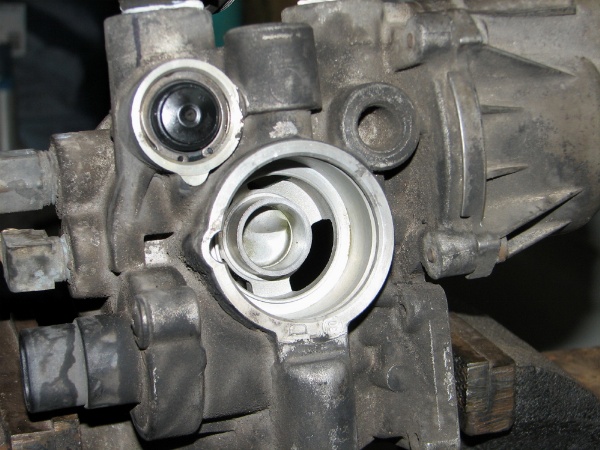
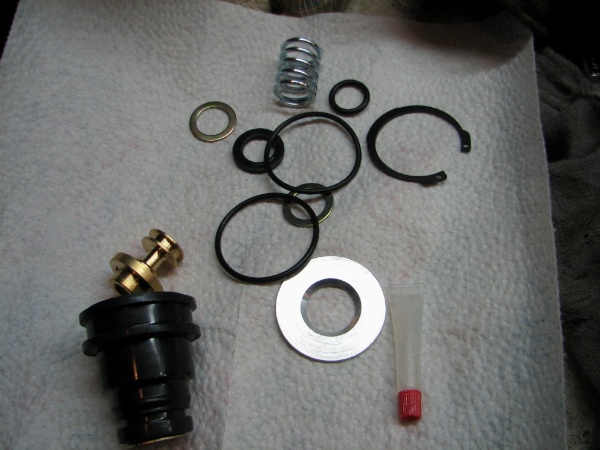
    If your dryer purges air and you immediately lose air, chances are the dryer purge valve needs rebuilt. This is what it look like:

  • Tom

    Member
    December 9, 2012 at 10:32 pm

    Sounds like everything is OK with the converter line valve closed. I am guessing that you have a major air leak somewhere down line on the converter line. Disconnect it and connect it to an separate air compressor and track down the the air leak.

  • AL

    Member
    December 12, 2012 at 6:41 pm

    Thank you all for your reply’s. There is certainaly some good information here. I haven’t located any grey covered switch but will keep looking. Aux Compressor, the only other compressor on this coach is one that runs off the 110 current and operates the air flush and air pocket doors. Tried following the airlines, thats next to impossible as they run through a 6″ PVC pipe, uugh. The air dryer is new within the last month, replaced thinking that was causing the issue.

    Can I hook up a shop compessor to the bus and push air through the system without causing damage. This way I can listen close without having the bus engine running????

    The purchased the coach right after Senators released it from a 10 year lease. So I don’t believe any modifications have been made since the original conversion from Vulcan.

    I think I may have to bring it directly to Prevost. Has anyone had any experience at Prevost in New Jersey?

    Thanks again for everyones help

  • David

    Member
    December 12, 2012 at 8:03 pm

    Not familiar with your conversion, but you should have an air connection in the engine compartment, starboard side. This connection fills all air tanks including the aux. If you have a connection in the steering bay, it most likely will only supply air to the aux tank.

  • Archived

    Member
    December 12, 2012 at 9:24 pm

    Doing an air line from a shop compressor is workable. During my search for leaks I have used this isolating the branch service. Using a small shop compressor with a 2 gallon tank and adjustable line regulator. This worked great for service line checks. This shop compressor with all the moving around the shop does not leak down. Take a picture of the gauges for the overnite record.

Log in to reply.