Prevost Community Forums

Find answers, ask questions, and connect with our
Prevost Community around the world.

  • 35 Gallon Oil Change

    Posted by Davy on April 14, 2014 at 7:45 am

    I was having a wheel seal replaced at Prevost Nashville but first I had them change the oil. It was all going well until….

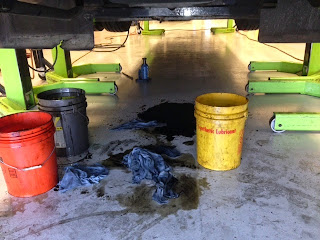
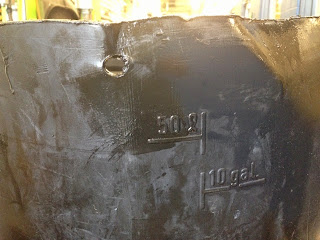
    While the mechanic from Prevost was adding oil with their automated dispenser, the dispenser failed to kick off and they overfilled the engine. In fact, they drastically overfilled the engine. It holds about 40 quarts or 10 gallons. After they discovered the problem they drained 25 gallons to get down below the full line on the dipstick. Yep, you read that correctly. 25 Gallons too much!

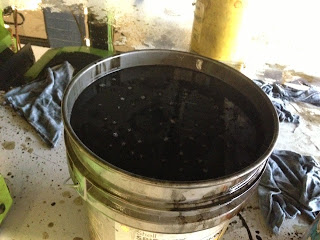
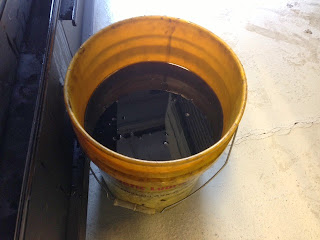
    Three buckets of oil plus what ended up on the floor
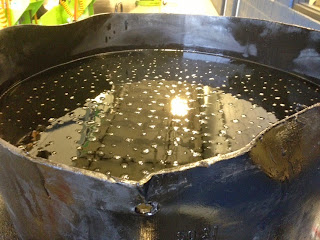
    Plus a pan that was filled above the 50 quart line
    They called the oil company out (If I understood correctly they had just been there to service everything that day) and the rep found he had left that particular dispenser on manual rather than automatic. He immediately corrected the problem. If he pays for 25 gallons of oil, that may be the last time he does that.

    It could have been catastrophic had they started the engine. They did not start it because even though I had stepped into the lounge to use the facilities the bus door was locked so they came looking for me to start it. While I was unlocking the door, going inside and getting seated they noticed the level was too high. You better believe I will look at the dipstick myself before I start it on future oil changes. (That is something they always do at where I normally have it changed.)

    They turned the crank on the engine by hand. Once they realized it turned easily and had no oil above the pistons they had me start it and everything seems fine. I did ask Mike to detail all of this on the service notes just in case there was any problem in the future.
    Once that baby heart attack was over it was time to move on to the leaking wheel seal. All of that went pretty smoothly.
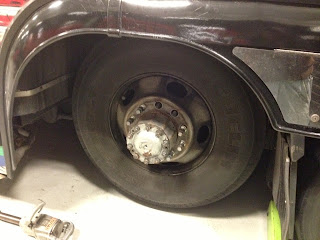
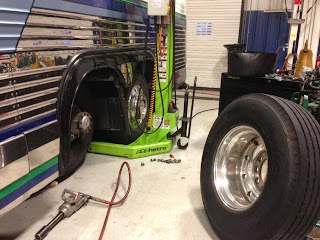
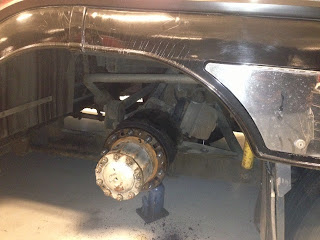
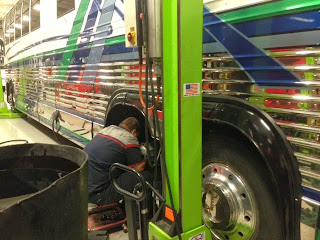
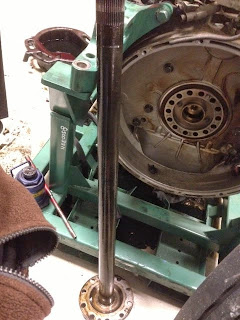
    This is the axle standing in front of a bus motor mounted on a rack. This is a position that I never want to see my motor in by God’s grace.
    My old bus does not have a place to add gear oil directly to the wheel once it is put back together. So they seal it all up, lift it in the air, add gear oil and then tip it to the side and let gravity fill it up. It looked like it was fixing to lay over on its side. I am sure Prevost has good insurance!
    I am by no means slamming Prevost Nashville. It was an accident that could have turned out very badly but so far it is just an unpleasant experience I can use to learn something.

    Davy

    AL replied 12 years, 5 months ago 9 Members · 20 Replies
  • 20 Replies
  • AL

    Member
    April 14, 2014 at 8:28 am

    Just a comment on insuring bearings are lubricated after a hub seal replacement.

    Tipping an axle in the case of a drive axle seal replacement is a great way to fill the hub. However, it seems to take forever for the high viscosity gear lube in the differential to ooze past the inner bearing to fill the hub. Make sure if you have a hub seal replaced the shop allows a lot of time with the axle tipped for the hub to get oil into it.

    As an alternative I lightly pack the bearings with high temp grease and then tip the axle just to be sure because a dry bearing has as little as a few miles of life.

    35 gallons???????? That suggests the mechanic was oblivious to how long it was taking to fill the crankcase.

  • Davy

    Member
    April 14, 2014 at 9:54 am

    Just adding some information to DKO’s post. Some members might be curious on why the Prevost techs turned the engine by hand prior to starting ? This was a very wise decision, believe me.

    In some cases fluids leak into the combustion chamber. Normally the spray of diesel fuel is very fine mist..thus the bang forcing the piston down after compression inside the cylinder. The combustion chamber is made to handle this.

    If a large amount of oil or coolant leak into the cylinder during the engine roll over the term used to explain what happens is often called ‘ hydraulic lock “.

    Engine oil in this case would be compressed to the point that it pushes to the weak point internally during rollover inside the engine. Engine heads and gaskets, engine oil pans exploding have been known to come apart causing severe engine damage.

    This Prevost tech would have not been the first to fall victim trusting automatic oil fillers to measure the correct oil level or lack of oil going into the engine.

    Simple fool proof no brainer….. check the dip stick before engine restart. DKO you are one lucky guy as they were unable to start your bus.

    By a lotto ticket.

  • Mark

    Member
    April 14, 2014 at 10:23 am

    Jon,

    Yes, that is what they did. I was concerned so they explained it all to me.

    Al,

    Lol. No Lotto ticket for me. I keep the doors locked for just this purpose. Thanks for explaining the potential damage. It could have been a very bad day for me AND Prevost.

    Davy

  • Davy

    Member
    April 14, 2014 at 1:38 pm

    Would a new engine on Prevost be bad luck?

    JIM

  • Davy

    Member
    April 14, 2014 at 1:39 pm

    Wow, what a problem that could have been, but that oil sure looks dirty (dark) must be the light. What kind is it?

  • Bryan

    Member
    April 14, 2014 at 1:40 pm

    Depending on who paid for it.

  • Archived

    Member
    April 14, 2014 at 3:06 pm

    A completely new engine would be nice but I would rather keep trucking along without weeks of down time and all the head aches connected with that. I am so glad it did not take that turn.

    The oil is Rotella T and looked good enough to drink but way too expensive to swallow. The pictures do not do it justice I guess.

    Davy

  • Archived

    Member
    April 14, 2014 at 5:50 pm

    Just curious— Why wouldn’t a prevost tech use the rear start vs the ignition key?

    Glad that it all worked out and no harm other than guy paying for the oil.

  • Archived

    Member
    April 14, 2014 at 5:59 pm

    That’s a good question Roger. The only thing I can think of is they don’t know if running the engine messes anything up, like having the suspension switches set to raise, tip or lower the coach.

  • Bryan

    Member
    April 14, 2014 at 7:19 pm

    “Just curious— Why wouldn’t a prevost tech use the rear start vs the ignition key?

    Glad that it all worked out and no harm other than guy paying for the oil.“

    I do not know why they did not try to start it from the rear but I am glad they did not. The time they spent coming to get me and then me getting in the bus gave the guy time to realize it was over full. If they had started it from the rear with 25 extra gallons of oil they would have had a big surprise.

    Later when they did start it from the rear they had me turn the key on so maybe they had tried it before they came to get me.

    Davy

  • Archived

    Member
    April 15, 2014 at 7:36 am

    All of my coaches started from the rear with the ignition key off.

  • Bernie

    Member
    April 15, 2014 at 8:09 am

    Mine won’t start from the rear without the key on.

  • Archived

    Member
    April 15, 2014 at 3:49 pm

    Mine either. I think I read somewhere that if you have the 4 way flashers on it will start, but I have not tried that yet.

  • Archived

    Member
    April 15, 2014 at 4:59 pm

    I had no idea that you could over-fill an engine with that much oil. Where does the oil go?

    They put in over double what your required, seems like it would have been bubbling over at 5 quarts over.

    Am I misreading something here?

    MM.

  • Greg

    Member
    April 15, 2014 at 6:38 pm

    The inside of the engine is completely sealed separating for oil from all other parts.

    So our oil dipstick follows it way to the bottom of the oil pan and coats the lower part with oil. Let’s say 10 gallons is called for exact amount for normal operation of the engine. As the engine rotates the crankshaft splashes oil along with an internal oil pump that pumps oil to the upper part of the engine. Every thing is turning smoothly with no restrictions as parts go round and round.

    Now if you fill to 35 gallons of oil inside the engine what usually happens with the pistons moving up and down they push oil inside with tremendous force and something has to give. It only takes a second when the engine starts that movement restricts travel because of the large volume of oil. Something will give or if oil has made it’s way inside the piston cylinder it locks up usually bending the connecting rod attached to the piston.

    That’s how the term hydraulic lock came to ID this disaster.

    Many engine dipsticks carry a warning, something like “do not overfill ” Better to be a quart low then a quart over full.

    I’am using a engine as a example of a quart low.. I’am also thinking some of my relatives fall into this example, just kidding.

    Hope this helps MM.

Page 1 of 2

Log in to reply.