
-
Volta Power Systems – Lithium Ion
Posted by Archived on January 8, 2015 at 10:40 amNo doubt the future of coach power will include a switch to Lithium Ion for power needs and it appears Volta Power Systems has brought the technology to the market for OEM and conversion applications of Prevost coaches. Randy at Panterra has partnered up with Jack Johnson in forming Volta Power Systems and now has a working system installed in an XLII.
After a Volta Power Systems Seminar yesterday at Parliament, I thought folks would be interested in an actual conversion of a standard battery system to Lithium Ion. The Volta converted bus has been traveling around the country proving it’s reliability. Volta will be at the Tampa Super Show and here’s their website:


Larry & Diane replied 11 years, 7 months ago 11 Members · 20 Replies -
20 Replies
-

Tom,
That’s one of the reason’s we chose Liberty Coach for a bus conversion. After many hours of reading about the Lithium Ion batteries, talking to the head man at Liberty, I was sold on that technology.
The fact that ours have a realistic lifespan of 10 yrs., the batteries can then be rebuilt at a much cheaper price than replacement. Win, win!
Mark
-
Any idea on how the pricing compares with a set of “regular” house batteries? Can’t see any mention of cost on their website.
-
Tom…
Just a question. Thankfully, I won’t need batteries for several years, but I wonder if this lithium unit you’re talking about will work in my Marathon. When I bought batteries, I was told I had to buy Lifeline brand batteries because that was the only brand that would work with the electronics and informational systems in the coach. Just wonder what the outcome would be if this type of battery was used rather than the Lifelines.
-
Tom sells Lifelines but he never tries to push them on anyone. So if anyone (a converter or owner) tell you to use Lifelines it is likely because they have been proven to not only provide the best life span, but because the company has done an excellent job of standing behind them.
We have plenty of battery options, some make sense and some not so much sense. Each type of battery has advantages and disadvantages. The vast majority of owners have gone with Lifelines because of their quality and trouble free nature. Regardless of what type of batteries are used however the inverters must be set so the charging protocol is compatible with the batteries. Lifeline batteries come with an instruction sheet that tells what the charging voltages must be for the three stages of charging. Because your converter likely set the inverters to the charging protocol of Lifeline AGM they are saying to remain with them.
But there is no reason anyone must stay with one battery type, as long as it is recognized that a change may also require the inverters to be reset.
LI batteries however act different than the batteries we are all used to so a supplier of those is also going to provide initially the entire system set up specificaly for LI batteries. If you opt to switch to LI substantial changes will be required to the coach battery and charging systems.
-
I’d like to add just a few comments regarding batteries. Since the vast majority of owners still have AGM, GEL or flooded cell batteries we see the voltages of our batteries when charged at around 12.6 to 12.8 volts. Depending on the way a coach is used we have a substantial role in how long our batteries last. Deep discharges and subsequent recharging have a profound impact on battery life. So if we can it is in our best interests to avoid deep discharging, and to recharge before or when the batteries are at a 50% charge which is in the range of 12.2 volts.
Just doing that can provide as much as 5 times the number of charging cycles before the battery has used up its life.
Allowing batteries to be completely discharged in some cases is the kiss of death so as owners we control our battery life span and performance.
When dry camping a lot of owners rely on auto-start to recharge batteries. Some are non-adjustable so the only option if the auto-start is set to a low voltage is to manually start the generator before the voltage gets too low. Other auto-start allow the owner to adjust the generator start voltage and if possible that should be set to a 50% level.
-
Tom,
Jon covered it we’ll and any AGM with the same physical dimensions and charging protocol will work with your Marathon, of course I wouldn’t use anything except Lifeline.
I just quoted batteries to a fellow last week with Lifelines that are original and 12 years old. Now that’s service!
-
One thing interesting with Randy’s Volta System is it’s a complete plug and play package.You have the battery pac, inverter/chargers, converter for 12v and alternator. The inverters are 3800’s and have the auto-start. Everything is 48 volt input with 12 and 24 out.
They made no modifications to the bus electrical system.
-
I am very seriously considering having this conversion done to our coach. I initially met talked to Randy and Jack with Volta at a rally in Louisville last summer and spent a great deal of time looking at the components, their installation, and learning about the conversion to 48V. At that time their modification of the Panterra Lithium Ion coach was literally only several days old. Seeing these guys 6 months later in Tampa and hearing about their experience living with the system and making just a few small tweaks to the settings has gotten me closer to pulling the trigger.
My wife and I tend to dry camp much more often than we stay in a campground. We therefore rely on the batteries and generator while we are parked. I am not hesitant to run the genset to prolong battery life and the hours on it are an indicator of that fact. This new technology seems to be the perfect solution for us. What will be interesting to see is what the price to convert ends up being and we are waiting on an estimate now. I will keep you all posted.
-
For what its worth…I have worked with Lithium battery systems in Liberty coaches since they began using them. I find that when talking about our house systems we must be careful what we change so that we can still use our coaches and be able to get parts/service I have seen failures causing your whole coach system to be shut down and then unless you have parts on hand must wait on things to get shipped to you in order to fix the problem So I would be cautious that I wasnt going to get left hanging out there with out the ability to use my coach. Other issues I have seen is that technology changes so quickly that one component or company changes or goes out of buiness….Then you are back at square one.
I see the extended use of dry camping and being able to run air conditioning while doing this. however it comes at a cost. The batteries used on a Liberty are in the 6K range each….these are very smart batteries that have a smart card in them so the history of the battery can be pulled up. Also we can look at each cell of the battery and see temp and voltage per cell…..
So all that said to say that like everything on a coach each person must put their own value on things that are used and how important they are to us….
-
I can echo what Jeff posted because I have had the type of failures in which the total coach was shut down.
I am not suggesting LI batteries may have failure points that will do that, but I know when the failure happened on my coach hundreds of miles from home and a service location I had to do some temporary rewiring to be able to get home. It is important to understand how your coach is impacted if a part or circuit should fail. In most cases we have either some redundancy, or we have a means of bypassing the defective part.
A good design will provide a means of dealing with a failure. But the burden is still on you as owner to understand how you are going to deal with a failure when your only access to service is a phone.
-
I only said I was closer. Those are great points. Serviceability of any system is a major factor.
-
I am not attempting to discourage just sharing experience. The converters can try new products or systems and then are willing to send people to the bus,have a driver go get it etc to make systems work. There are usually several refinements with any major system installed.
-
I’ll share my experience because I wanted LI batteries.
I talked to Liberty and a company that is selling LI batteries and systems for RVs.
Here are some conclusions I reached. There is no doubt I would get a weight reduction. There is no doubt a system that provided the dual DC voltage systems my coach has would be created using LI batteries and converters to give me the voltages I need. I could retain my inverters. I would not sacrifice performance, and in fact the performance might increase.
But I did not proceed because in my case with a retro-fit there would be more than just a change in batteries. The system would require additional devices I do not currently have. I would save weight. I would likely gain battery life. But I could buy a lot of year’s worth of batteries for the cost to change my electrical system over to LI. In my case the cost was enough to replace all my AGM batteries every 5 years for the next 80 years. I’m sure inflation would eat into that, but the point is I couldn’t come close to justifying the expense or paying that much to reduce the weight.
I still want LI batteries. I will relocate my batteries because where they are now is not the best place. And if I get LI batteries it is because the weight savings will help towards enabling me to use the available space for an auxiliary fuel tank. I do place a value on not stopping at truck stops so anything I can do to reduce the number is worth something to me. But I cannot make the changeover for the current cost, and without having a solid gold program to deal with issues which prevent use of the coach.
-
One main reason why I like LI Batteries is that they work like a cell phone battery. You have 100% power until you have zero. The air conditioners or any other motor is not suffering from low voltage as a regular battery will start to get low.
We have 3 LI batteries and 4 inverters. They are in a compartment that has 3 electric fans that keep air flowing in that compartment. I was surprised that the LI batteries are about the same size as a regular AGM battery.
I’m hoping to get good service out of this set-up and feel I will with the track record of the previous Liberty Coaches with this system (from what I have heard).
MM.
-

I saw Volta’s system at Tampa and talked to Jack Johnson. I learned he is an electrical engineer and had a significant career with Milwaukee based Johnson Controls which might be the largest battery manufacturer in the country (world?) and is a leader in cutting edge battery technology.
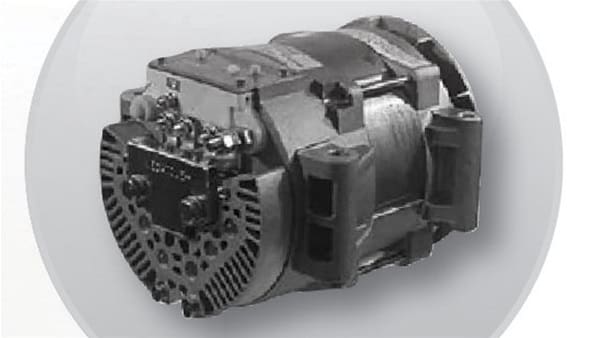
Jack said that the alternator that is part of their system takes 6hp vs the 30hp that our current alternators draw (DN50) and is smaller and lighter. After leaving the show I got to wondering if Volta’s alternator would be a reasonable replacement when our DN50 fails.
Anyone have thoughts about that?
Log in to reply.