
-
How Hard is it to “Hole Saw” a SS Panel?
Posted by John on June 17, 2012 at 5:46 amI need to add a second cable inlet on the right side of my bus. The standard one is on the wrong side for me and only has one cable inlet. I need two Sat feeds from my warehouse-mounted dish to feed my DVR while the bus is parked.
So I have routed two coax cables to the right-side bus air compartment, and it is my intension to use a hole saw and cut about a 2-1/2 inch hole in the lower compartment door panel and install another Marinco TV/Phone inlet modified for 2 coaxes.
My only experience cutting hole in bus stainless was drilling the Liberty stainless flaps under the rear bumper (so the TOAD cord could pass without the flap being held up). I ruined 2 bimetal hole saws and ended up having to take the piece to a fabricator to be plasma cut. Obviously, this would be a difficult option for a bay door.
That flap is very thick, and I wonder how the process might differ drilling a door. Any thoughts appreciated.
Ken replied 14 years, 3 months ago 9 Members · 17 Replies -
17 Replies
-

John,
The chrome in stainless makes it hard to drill and in my opinion the quality and hardness of typical hole saws is going to make it near impossible to do a decent job. If I were to need a big hole I would likely drill a center hole and use a Greenlee punch. Those are sheet metal hole makers that consist of a die and punch but you need to access both sides of the panel in which you want the hole.
The drilled hole is for the bolt that goes through the punch and die and as it is tightened the punch makes a clean cut through the stainless panel.
For a one shot deal I would not go out and buy one because they are a little pricey, but a phone call to shops that typically use them, such as an electrician, a plumber, etc. will turn up someone that has a set and likely your size.
If you cannot access both sides of the panel you can try a hole saw, but I suspect you will go through a number of them before you make the hole, even in material as thin as our bus skins.
-
John,
My first thought is make sure you have exhausted all other possibilites before you attempt to add another hole in your bus’s exterior, i.e. in a bay and out the bottom, like water in/water out.
If you end up thinking that the only way is a new hole in the side of the bus, I would try using an angle grinder. I have a Bosch varible speed that with smaller cut off wheels, I can grind circles with. Notes; Start by tapping off a area at least twice the size needed with a good masking tape. Don’t spend two much time in one area or you will get burning, if you keep moving around in the circle you get through. Another note; I have pollishing equipment if I would ever burn the stainless.
It is very hard to drill or cut that pretty stainless. 🙂
-
Dale,
Have you ever tried the punch method recommended by Jon? I do have a Greenlee set, but have never used them on SS. Jon, have you ever tested the method on a Prevost skin?
I could probably get by with a 1.5 inch hole.
-
I haven’t even heard of it until Jon mentioned it. Sounds like it would work good though.
I have some lower panels that Harry H gave me, I wished you had one to experiment with.
-
John,
In another life I designed and devloped products for the medical industry like sterilizers, biological refrigerators, nurses station units, etc. They all had stainless steel cabinetry. During development of prototypes we often wanted to add holes and we used the Greenlee punches on both mild steel and stainless up to 16 gauge (about 59 thickness). I doubt if our bus skins are 20 gauge so the thickness is much lighter. It will work fine if you can get at both sides.
If we couldn’t use the Greenlee because of access or other reasons we scribed the circle, used small diameter drills around the periphery of the hole and then used a die grinder with an abrasive material or a carbide burr cutter.
-
It might be easier to make a longer coax cable to reach the existing plug.
JIM
-
You could drill holes in the corners of a square that would be covered by the plug flange and gasket. Use a 1/2″ drill and through that would pass a hack saw blade (one end covered with tape) to cut by habd carefully a hole to pass the body of the plug/receptical. Have two blades incase, one should suffice.
Working with stainless have sharp tools. SPEED IS THE ENEMY. If you had the strength to hold the drill motor and could run it slow enough the hole saw with cutting oil would work.
A produst called tapmagic might help as a cutting aid as it cools by a chemical means. Cutting on a vertical surface willmake it difficult to keep the cutting interface cooled with any product. There are thickeners to add to cutting oil to make it stick, found in specialty houses.
Make the square hole you will be happy. Nice and slow, NO OOPS, if you know what I mean.
JIM
-
Where are you located? I have a 100 amp plasma. Punch a hole with little or no cleanup and no discoloration or warping from heat.
-
I, like Jon, am in Knoxville, TN.
I did use the port side inlet, previously, but I now need 2 coax runs and it was very inelegant in my garage. I am well known for not doing things the easy way. I will often expend countless hours and dollars for incremental improvements in things… call it a character flaw!
It sounds like the Greenlee punch is the way to go. As sson as my new inlet arrives and is modified for two coaxes L’ii give it a go.
Thanks everyone!
-
Go with Jon’s recomendation. The Greenlee punchs will go through 16-18 gauge stainless steel and leave a quality finish. The bus is probrably 22 or 24 gauge. Sugest you go to a local electrical contractor and have them do it for you. The Greenlee punchs are on the pricy side for a single use. The larger ones will be pulled together by a hydralic ram that looks similar to an impact wrench rather than turning a bolt to squeeze the halves together.
-
Could you not drill a hole in the bay floor and put in a marine screw type cover plate?
-
Mission Accomplished!
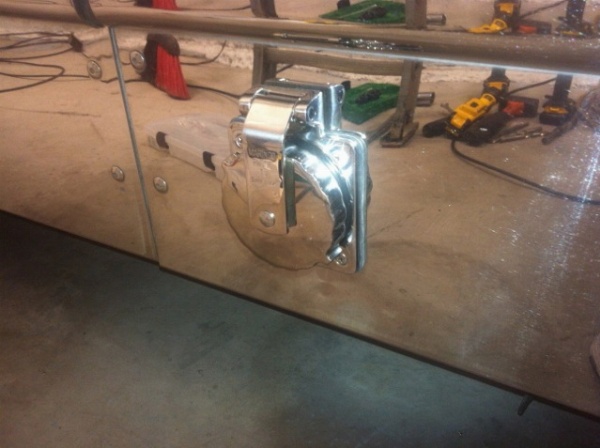
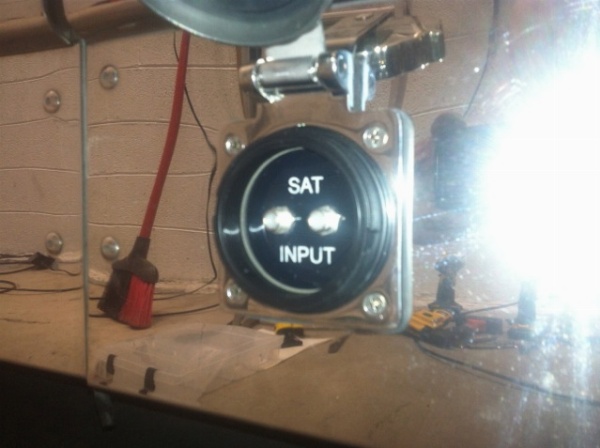
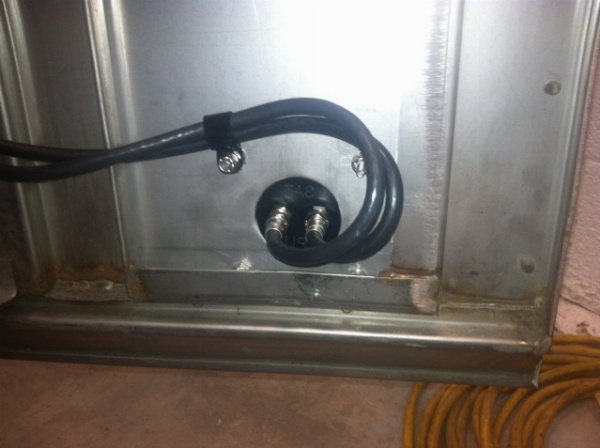
It was very easy to punch the hole I needed using the Greenlee punches. I was realy quit suprised how thin the bay door skins are on an XLII. Thanks everyone for the input. Pictures of the final product below.
-
Well done. Now don’t forget to make notes and label stuff so the next owner knows what and why.
Very professional looking.
-
Very nice John…
How about it boys and girls, John’s project turned out looking
like a professional job and I believe it’s safe to say his
participation in PC and the wealth of knowledge on this site
contributed greatly.Pass the word, we ARE the “Go to Place” for the Prevost
Community.PS – It didn’t cost John a dime for the privilege!
Log in to reply.