
-
Generator Sound Sheild
Posted by Paul on August 12, 2013 at 5:17 pmI recently noticed a thick dark brown sticky substance
oozing from the bottom of the door to my generator sound shield.Vantare installed a barrier
composite insulation material comprised of a layer of foam, followed by a PVC layer,
followed by more foam, and then covered by a Mylar coating.The PVC layer is almost melting in spots and is seeping out
from between the layers of foam.I have the door off and am in the process of removing the
old material and will replace it with the Soundown brand. I have used Soundown on
many boat projects in my past life with great success and no issues.The break down of the PVC layer is happening with the normal
heat cycle of the day. The bus is in a non-temp controlled garage so it will
get up to 85 -90 degrees but it has not been exposed to sun nor is it related
to genset heat. The genset has not run in about 6 weeks.I am just curious if anyone else has had a similar issue with their sound shield insulation or if this is an isolated case.
The obvious concern is if this breakdown is a manufacturing
flaw or if the material is not rated for the normal operating temps within the
sound shield, I will at some point need to pull the genset, strip out the old
and replace with new.Thanks,
Paul
jack replied 11 years, 1 month ago 8 Members · 18 Replies -
18 Replies
-

Paul, This is not a problem exclusive to your Vantare. Over the years I have seen the various types of sound deadening surrounding generators disintegrate to the touch, fall from the box probably due to adhesive failure, and otherwise suffer some type of failure.
Our generators do contribute to the failure because when they are running the sound box is being heated as a result of the generator and the exhaust system pouring heat into the box. Most if not all have some type of ventilating fan for the box, but I suspect the internal temperatures in the box are quite high.
So as a result a number of owners have done what you anticipate doing. They have relined the sound box. What you are encountering is something all of us will face at some point.
-
My coach being a Country Coach, never has anything wrong with it BUT I too have this problem and time to address.
What material are you useing and where do you get it.
-
I
ordered the Soundown brand barrier composite insulation with pressure sensitive
adhesive directly from http://www.soundown.com
in Ft. Lauderdale. For the amount I needed, they were cheaper than going
through a normal distributer/dealer. I also ordered the seam tape from them as
well more because it will match the Mylar.For
what it is worth, Soundown’s material is tuned to minimize lower frequency
sounds. The material originally installed by Vantare was tuned to minimize
higher frequencies. The tuning is done by the location of the PVC barrier
within the foam.This
is pure guesswork on my part but I suspect the sound barrier installed by
Vantare was for gas/propane powered generators that run at 3,600 RPM rather
than the 1,800 RPM that our diesel gensets turn.In
my opinion. I don’t think it will make one bit of difference in the sound
attenuation switching brands of material but in theory, the Soundown should be
a better match to the low frequencies produced by the diesel.In
talking with the Soundown folks, they have never had a complaint of the PVC
barrier “melting” in their product such as I am describing. As stated in my original post, I have
used Soundown products for many years in the marine industry with excellent
results.Disclaimer
– I have no affiliation with Soundown other than being a satisfied customer.Paul
-
How about a link Paul. With the number of coaches out there it is a safe bet a number of members will benefit from knowing about these folks.
-
Jon,
Not sure how to post an active link to the forum. I tried the right click option but nothing shows up so I must be doing something wrong.
The website is http://www.soundown.com and you can copy the following into the address bar of any browser to go directly to the product I purchased.
I’ll help you here Paul: Soundown
-
Please post some pics when you are working / done. It would be nice to see what the product looks like.
-
I will try to put together a before and after series of shots for the project.
Paul
-
This link will show what I did to redo my generator bay.
-
I’ve seen Andre’s work and it looks great, although I don’t think he will ever stand up straight again after being in that bay!:) It was a perfect time for Ann to close the door…
I’m pretty sure my Liberty would need the generator removed to do the job. Anyone done that yet?
-
I have had my generator out at least 6 times,exhaust replaced,oil leak,starter problem,installed fresh air fan to cool electrical controls,etc,all it takes is a forklift or a pallet jack,I can have it out in about 15 minutes.
-
I fully agree with Jack about the ease of doing things that on the surface seem impossible without special equipment.
Whether it is the removal of a water or holding tank, a generator or an entertainment center the key is to make sure everything that needs to be disconnected has in fact been disconnected. Once that is done the balance of the job is to use what you have available to complete the removal.
We are so used to seeing people with hoists and fork lifts and specialized equipment do work such as heavy object removal we overlook using the methods people have used for centuries successfully. Pry bars, small round rods, maybe even a jack or come-along all can be used to eliminate the use of brute force. Pry the front of the entire generator assembly up using a pry bar, slide a few lengths of 1/2 copper tubing to act as rollers and a 10 year old child can start rolling a generator out of position. Even our coach can be used to do the work for us. We can tilt it and raise and lower it so if needed we can use that feature to eliminate some back breaking work.
Over the years I have worked alone on the coach and the older I get the less I want to use muscles to do the work. It is amazing what some wood blocking, levers and small pieces of round rod or tubing can be used for. BTW, lifting the 173 pound 8D batteries is a whole lot easier if we think about using mechanical advantage rather than risking injury.
-
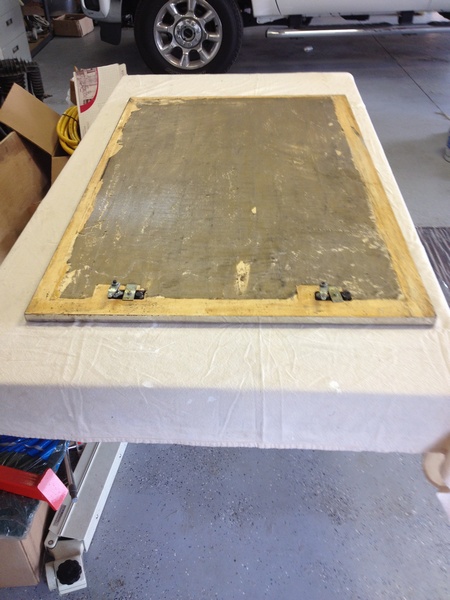
I got the door to the sound shield finished today. It was a
pretty messy job cleaning off all the old adhesive so the new material would
stick to the wood substrate.There were two areas of the original insulation that were
affected. A large area directly under the tools and a second area just under
the half round dark circle. The area under the tools is directly across from
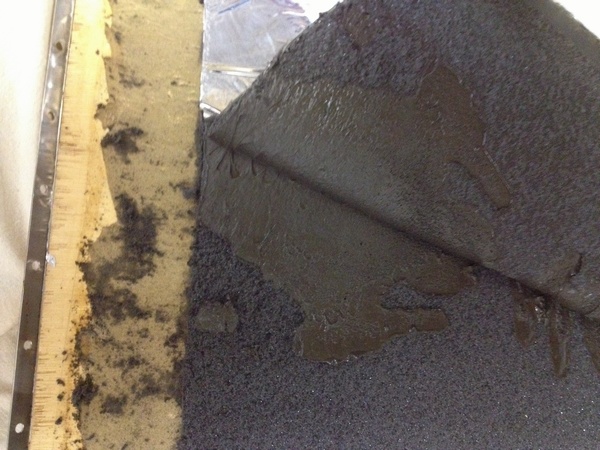
the generator head and the half round circle is the oil filter of the diesel.The area adjacent to the oil filter was really bad and most
of the melted PVC was oozing from this area. The section adjacent to the
generator head was melting and you can see this in the photo as I pulled the
foam back.It appears that heat from the oil filter and generator head
caused the melting so my next project is to make sure there is enough airflow
through the enclosure. I know there is a big squirrel cage blower but have no
idea if there may be a filter on the intake side that may need cleaning.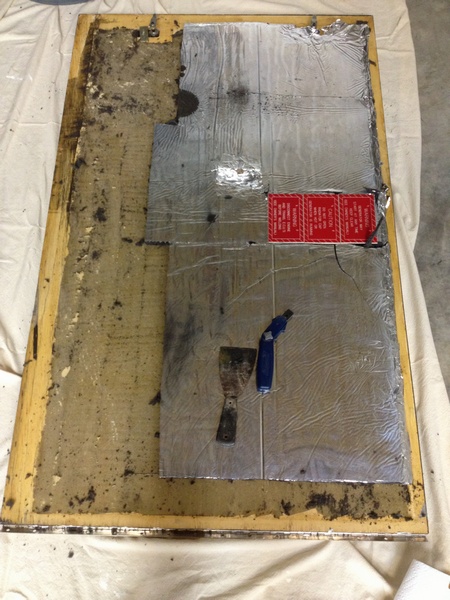

-
Some times there is a little voice calling out. Use new “wood”, it will be easier.
Just sayin, JIM
-
I’ll bet the other side of that wood panel has a laminate finish that matches his coach’s bays.
Log in to reply.