
-
Air leak repair
Posted by Tom on February 20, 2012 at 1:52 pmI am trying to chase air leaks and have found 3 so far that I can hear. The first one is what I assume to be the air filter for the suspension system. It is a Norgren filter F12-300-MD3A. The leak is coming from the threads that the drain cock screw into. Looks like plastic threads that have cracked. Can the threads be replaced? Is this part of a filter change? I do not want to mess with it too much until I get replacements parts so I don’t cause a huge leak to put me on the side of the road. What is the best source of parts for this? Prevost? Prevost part number for the entire filter housing is I believe to be 64-1135.
OK. Second leak is the Norgren ( I assume) electric operated valve for the camera pod door. the numbers that I think I see, reading it upside down is N71AA01-NSO-NDO. It is leaking out what looks to be the exhaust hole at the electric selonoid. The selonoid portion is loose and when I move it around the leak gets worse. Can this be repaired or replace the whole valve assembly. Prevost part for this is again I believe to be 64-1204.
Third leak is the left air guage in the dash. It is leaking out of the push connector on the back of the guage. I tried getting the 1/8″ hose out of the coupler to no avail. Tried pushing in on the release and pushing and pulling on the hose but it just would not come out. I will next get a new push lock and replace it on the back of the guage and the should fix that one.
Thanks for the help!!
Clifford replied 13 years, 7 months ago 26 Members · 66 Replies -
66 Replies
-

Norgren has distributors in almost all large cities so if you have the Norgren part numbers the distributor in your local area can likely help you. Norgren is excellent for parts so if there are replacement parts or kits you can likely buy them through the distributor.
You really got my attention when you talked about fixing air leaks you can hear. Most of us wish it was that easy. As you get into your leak repair project it is probable that on a coach that has not had regular leak maintenance work that you will have many hours dedicated to finding and then fixing leaks. As the leaks become less obvious the amount of time and patience required to find them increases.
The reward for having a leak free coach is significant. You will hardly ever have to run the auxiliary compressor, your bus will not drop unexpectedly when the aux system drops below 30 to 35 PSI and you will learn a lot about your coach.
-
Thanks Jon. I thought it best to start with the obvious. I agree it will take a lot of work to get it leak free, but I enjoy that type of investigative work. I am off to search for parts!!!!
Thanks,
-
If that Norgren filter bowl is clear plastic, I’ve replaced 2! They made a steel replacement for my application which I’ve now installed.
-
Tom,
Any chance you could post a few pictures of the items you need or
what is causing your problems?As for aux air leaks, it’s a never ending battle, but worth the
effort. I have been over every single valve, fitting or junction and
still have a small leak somewhere, I suppose buried in the belly of
the beast and not accessible. Just getting the aux to a
manageable level is rewarding. I use an electronic stethoscope
that picks up small leaks even the soapy water doesn’t show. -
Third leak is the left air gauge in the dash. It is leaking out of the push connector on the back of the gauge. I tried getting the 1/8″ hose out of the coupler to no avail. Tried pushing in on the release and pushing and pulling on the hose but it just would not come out. I will next get a new push lock and replace it on the back of the guage and the should fix that one.
…………………………………………………………..
My first adventure of chasing air leaks in my bus lead me to the same leak you are describing. The fittings used to connect the 1/8″ tubing to the Primary and Secondary pressure gauges are ‘low hanging fruit” in the pursuit of managing bus air leaks. The easiest thing to do is replace both of the the 1/8″ fittings. I searched for 1/8″ compression fittings to no avail, so I replaced the fittings in kind with new push to fit fittings. The new fittings rubber seals and the1/8″ tubing worked fine. I cut off an inch of the old 1/8″ tubing to expose uncompressed tubing and reinstalled.
I am the guy that had soo many leaks on my bus when purchased, I had to become very aggressive to manage these leaks. I 1995 Prevost will sit for weeks and will not lean. The aux air compressor will run every couple of weeks. It will take effort to achieve this level of air tightness, but it is doable.
My last comment on leaks. For me, leaks have been a moving target. Meaning, getting a bus to a leak free status once does not mean it will stay leak free forever. You will need to monitor and manage leaks. Their are soo many opportunities for leaks in our complicated suspension systems.
Good Luck,
Hector
-
Thanks for the replies. My filter is steel and not plastic but the threads at the bottom are plastic.
I will try to post pictures when I get a few moments, and that should help someone identify the part I need.
I am looking for new push in fitting for the guages, just have not found them yet.Thanks,
-
Replaced the Norgren air filter Saturday and that stopped that leak. Was going to replace the Norgren in the engine bay that controls the rear view camera door, but it is so different and I am going to need more parts. It is the same function as the existing but is bigger, mounts different and the air ports are flipped in relation to the electric plug.
Also replaced the fitting on the left dash guage and stopped that leak.
I also have a couple of Norgrens that leak out what I believe to be the exhaust port (has the red plastic screw with slots on the side in it). Can this be repaired with an O ring or does it have to be replaced?
Thanks again!!!
-
Leaking out of a Norgren exhaust port, may mean there is a leak in some component up stream from that port, or it could be an intermal leak in that valve.
The rubber seals on the valve spools appear to be conventional O-rings but are infact special proprietaryy washers. These washers can develop nicks and cuts that will cause leaks.
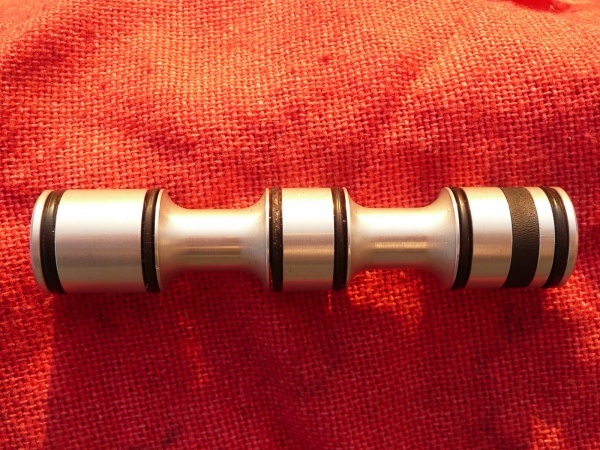
Note the roughness of the third rubber from the left, it is too rough to seal.

This is the shape of the rubber in the groove. Note the nick that surely did cause a leak.
My recommendation; if you suspect the valve at fault, replace it with a new one, you will then be good for about 10 years. Your job will be done and you can enjoy the coach. Save the old valve and at your leisure take it apart and study the parts and pieces with a magnifying glass to satisfy your curiosity and understanding. If you discover that the valve is not too corroded and looks reusable, grease it up and reassemble it for a spare.
Some internal parts are available from Norgren. If as is often true the small screws break you can use all the other good parts for spares, but not the body with the broken screw.
JIM
-
At another time in my life I used to rebuild my Norgren valves thanks to the excellent availability of repair parts or kits from Norgren. It was a great learning experience but the bottom line was that I had to recognize two things. If the valve failed because of corrosion internally due to moisture getting into the system, the valve body was scrap. It made more sense at that point to buy a new valve. My last replacements were new, but the valves I removed were shown to be corrosion free so when the time comes to replace my current valves I will rebuild the old set. Jim has nailed it about the end cap screws and I find a very sharp rap on the screws with an impact tool plus soaking in penetrating oil helps the binding of screws that comes about because steel screws in an aluminum body is a sure prescription for corrosion.
The second thing I learned is if the object of repairing or replacing valves is leak free operation then regardless of whether rebuilding or buying prior to installation I do a quick bench test to insure the valve is leak free. I ended up making a simple rig with parts from Lowes to insure there were no leaks because after installation trying to find a valve leak is very difficult. They can leak internally past the seal, or they can leak sideways out the end caps. The leaks are very difficult to isolate when they are part of the air system on the bus.
-
Hey Tom,
Tell me more about the electronic stethscope. How much? Where?
Thanks,
-
Tom H…..as you will figure out we all love encouraging other Prevost owners to spend money. Certainly chasing leaks is a fine way to get to spend a lot of money.
The use of your ears and soapy water is about as cheap as it gets for leak detection. I don’t know if an electronic stethoscope is so much better than a $5 one from Sears but consider how much use you will get out of one. To take leak detection to the next level you need an untrasonic leak detector which will find leaks ears, soapy water and a stethoscope will not find but you will spend over $400 for one. The ultimate, but probably with a cost of less than $100 is to build one of Hector’s bubblers.
If you build a bubbler however plan on spending hours, days and weeks opening up fittings connecting the bubbler and checking it for leaks, and if any are found, moving it downstream until you have isolated and repaired the leak. Sounds easy and it is, but it takes a lot of time and effort.
Or you can take out a mortgage and ask a technician to find and repair all your air leaks. In about a month you get your coach back and maybe there will be no leaks.
Hector……advice?
-
WooHoo!!!! After doing the work this past weekend the bus still has 110 pounds showing on the both guages and has not been started since Sunday!! Now if I can get the Aux system to stay up that long I will be in good shape!
-
As Hector has pointed out creating a “leak free” coach is a monumental effort, but once attained maintaining the coach in that condition is easy compared to getting it to that condition. On your coach the rewards for getting to that point are significant because as your aux pressure drops below 30 to 35 PSI I suspect your tag axle air bag air is dumped causing the coach to settle in the rear. The ability to maintain aux system pressure for your situation is highly beneficial.
Your first step is to learn the system and to methodically check each air circuit to see where the leaks are, and then to find and repair them. I get tired just thinking about that.
-
Tom,
Your making good progress, keep at it. Aux leaks are frustrating and seem to be never ending. The only guy I know without an aux leak is Hector and by the time he reads this, he may have a new one. Hope not….
-
Did you ever consider putting freon in air systems and usuing a freon sniffer ? to sniff out the leak
Log in to reply.