
-
House Battery Problem
Posted by Eric on November 7, 2016 at 10:09 pmMy 1995 Country Coach has eight AGM 8D house batteries. I bought eight new ones in March, 2016 and I have two inverters, the original heart interface 25 and I replaced one in October, 2015 with a Xantrex Freedom 458. The problem is that my batteries are being drained within 5 or 6 hours even with no major amp draw (refridgerator, microwave, lights, etc.) I can simply turn on one or both inverers and the batteries will soon be drained. The batteries will maintain a voltage of 13.2 if the inverters are turned off and I have load tested each battery individually and they are solid. Each battery is rated at 260 amp hours which should give me 1040 amp hours at 50% drain. What could be wrong?
needtocamp replied 9 years, 8 months ago 19 Members · 43 Replies -
43 Replies
-

What brand batteries did you use? How are you load testing the batteries individually?
-
Eric, I see where Jeff is going with his question and it is a good one because one bad battery in a set can pull down the entire set.
However based on your listing of conditions that drain the batteries I think you are indicating if the inverters are “off” your batteries do not lose power. You indicate power is drained only when one or both inverters are turned on. My question is if you only turn on one inverter, does the power drain occur with either inverter? If that is the case I would presume the inverters can be ruled out as the cause of the loss of power, but they are providing the path to the load. What provides some confusion is those inverters never provide power to the same devices (loads) so if the drain is only with one inverter and not the other the search can be more focussed.
What is your 120V current draw with the inverter(s) on. If the battery drain is within 6 hours it indicates a load on the 120V AC system that is fairly large, at least greater than a refrigerator, and maybe less than an air conditioner.
My questions presume the coach is not connected to shore power or generator power, and that when the batteries are depleted, providing shore or generator power to the inverters recharges the batteries.
-
The new batteries are Apex 12-260 8D AGM. I bought a load tester, disconnected all of them and load tested them one at a time; all checked out within a normal range. The batteries are not plugged into shore power or utlizing the generator when drained. I have turned each inverter on separately and each of them will drain the batteries, one more quickly than the other, but each will do it within 10 hours. The only measure I have of amp draw is from the remotes: one will show between 10 and 20 and the other 10 and this is with no power on I am aware of except parasitic amp draw from clocks, memory settings etc.. Thanks for any input you can give.
-
Ten hours is a good length of time 4 8ds will go about six hours with the fridge and freezer on and get to about 24.5 that’s on my coach
2025 Marathon H3 / 4th Prevost
21 Ram 1500 EcoDiesel 4x4 -
The problem is that nothing is on, no refridgerator, no TV, no lights. No major appliance or lights are on at all. I simply turn on the inverters with nothing on and I lose significant voltage.
-
This is a long shot, but check all the breakers in the panel that feeds power from the inverter to the bus circuits. Look for things like block heater, bay heater, hot water heater, insta hot. Things that are fed from the inverter but are not somtehing you would normally thing of. It is possible there is a load connected to the inverter power panel that is pulling power and you just do not see it. The inverter remote panels should have a menu item that shows total amps being consumed. Find that menu item then start turing of circuit breakers one at a time until you find what is draining the batteries.
-
Eric,
Assuming the amp is AC and not DC, that’s a huge amp draw with nothing on as you explained. I’ll ditto what Andre said, something is using a big AC draw. Items such as water heater, block heater, bay heater, etc should not be on the inverter circuit, but who knows what was changed in the buses history. Isolate the AC circuits by turning off breakers and try to find the amp source.
-
Thinking out loud with what I think are correct assumptions.
The batteries hold their charge for a long time if everything is off, including inverters.
The batteries were individually (separated from one another) load tested and none show a problem.
Assuming the above two statements are accurate I would presume the batteries are not the issue. I would still reverify what was stated above because batteries would be my first thought.
Either inverter, alone, has the ability to drain the batteries quickly, even if all AC circuits are turned off.
One inverter draws more current than the other.
There are two different models of inverters.
This is where it gets cloudy. It is a fact that systems of this vintage did not piggy back inverters so whatever is the current draw it is on two separate and isolated legs of the 120V electrical system. It is also a fact inverters draw power, but a slight amount compared to the stated loads.
If there is any load on the 120V side when an inverter on it is not the same load as when the other inverter is on.
I can’t get past the theory that the batteries are the issue because of the above assumptions. I think Jeff is on the right track.
-
Thanks for the replies. I found that shutting off the breaker to the line that ran the refridgerator (this is run off one inverter) and then shutting off the breaker that ran the microwave (this is run off of the other inverter) led each remote to show no amp draw for either inverter (even having the breaker on showed a minimal amp draw for some reason). I thought this would isolate the problem, but with the batteries fully charged at 11PM last night, I checked them at 7:30 AM and they were again drained! I’m going to shut off every power source and breaker I can find tonight and see what happens overnight.
-
If your inverters are turned off that means they are not only functioning as chargers, but that there are no 120V electric loads regardless of if the circuit breaker is on or off.
But even with all 120V breakers turned off, you are still going to have phantom loads, not visible. They would be everything from things like the burglar alarm, clocks, switch lights, signal boosters like for the antenna or the CB.
That many healthy, fully charged batteries should go many hours before needing to be recharged.
-
With the emphasis from your responses on the batteries, I have been researching my batteries more. I thought I had all of the charge settings correct when I put them in and for the remotes chose the standard AGM setting offered. After talking with the manufacturer today, the recommended setting for absorption charge is 14.6 to 14.8 (I was using 14.2) and the float charge is recommended at 13.6 to 13.8 (I was using 13.3). I don’t even have a setting that will get me above 14.4, but I will put it higher and the float charge can be up to 13.8. I will reset the remotes to these numbers and hopefully my problem is solved.
-
Eric,
I sell Lifelines and am not familiar with Apex, but those settings will probably not do anything to solve your problem. It appears you have an amp draw that you can’t identify. As I previously suggested, with the batteries fully charged, start turning off AC breakers while watching your amp draw to determine what source is sucking the life out of your batteries.
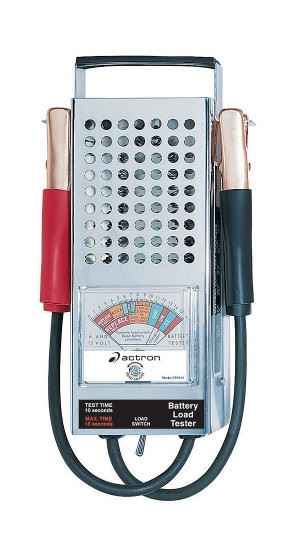
You said you load tested the batteries and they they were good. Your fully charged batteries with cables removed at rest should be around 12.9 volts. What type load tester did you use? The reason I ask, is if you’re using the old style toaster like the Actron, it will not work with AGM. You can use it for the load, but you need to read the battery voltage with a meter.
How long are your charges running during bulk/absorption charge and what is the charger amp setting during the charge cycle?
-
I have tested the batteries with a 100 amp load tester that I just bought (carquest, CQ-1000T) and use a multimeter for battery voltage and amp testing. I’m not sure how long the inverters run to bulk charge the batteries. The remote does allow me to change the amperage capacity of the batteries and I have that set at 2000 which is the highest available. I did completely charge the batteries, turned the inverters on, shut off every breaker I knew of and the batteries only lost a couple of volts in a 24 hour period and will begin turning the breakers on individually and measure the amps drawn from the batteries. The will be a weekend project. Thanks for the input and if there are other suggestions, they are certainly welcome.
-
That voltage lost is HUGE.
With no loads in that short period of time I would expect maybe one tenth of a volt or less, not a couple of volts.
If it is not too difficult I would charge the batteries to float. Then I would disconnect them from the house. Disconnect meaning I would either turn off all house master switches, or if there was any doubt disconect the cable to the ground or load.
At least that way I would know if the loss of voltage is related to loads, or is within the battery set.
If the batteries held voltage from the at-rest voltage then I would be done looking at batteries as an issue and I would be investigating the coach. If the batteries lost voltage I would isolate the battery that is the issue just so the supplier knew where the problem was, and then I would have the battery set replaced under warranty. If the battery manufacturer disputed replacing the entire set I would find another supplier.
Log in to reply.